Buying Guides
At the Port, the Inspector Asks for One Thing: The Temperature Record
Your container lands and the inspector opens it. First question: where's the temperature record? If you can't show it on the spot, your fruit waits — and waits.
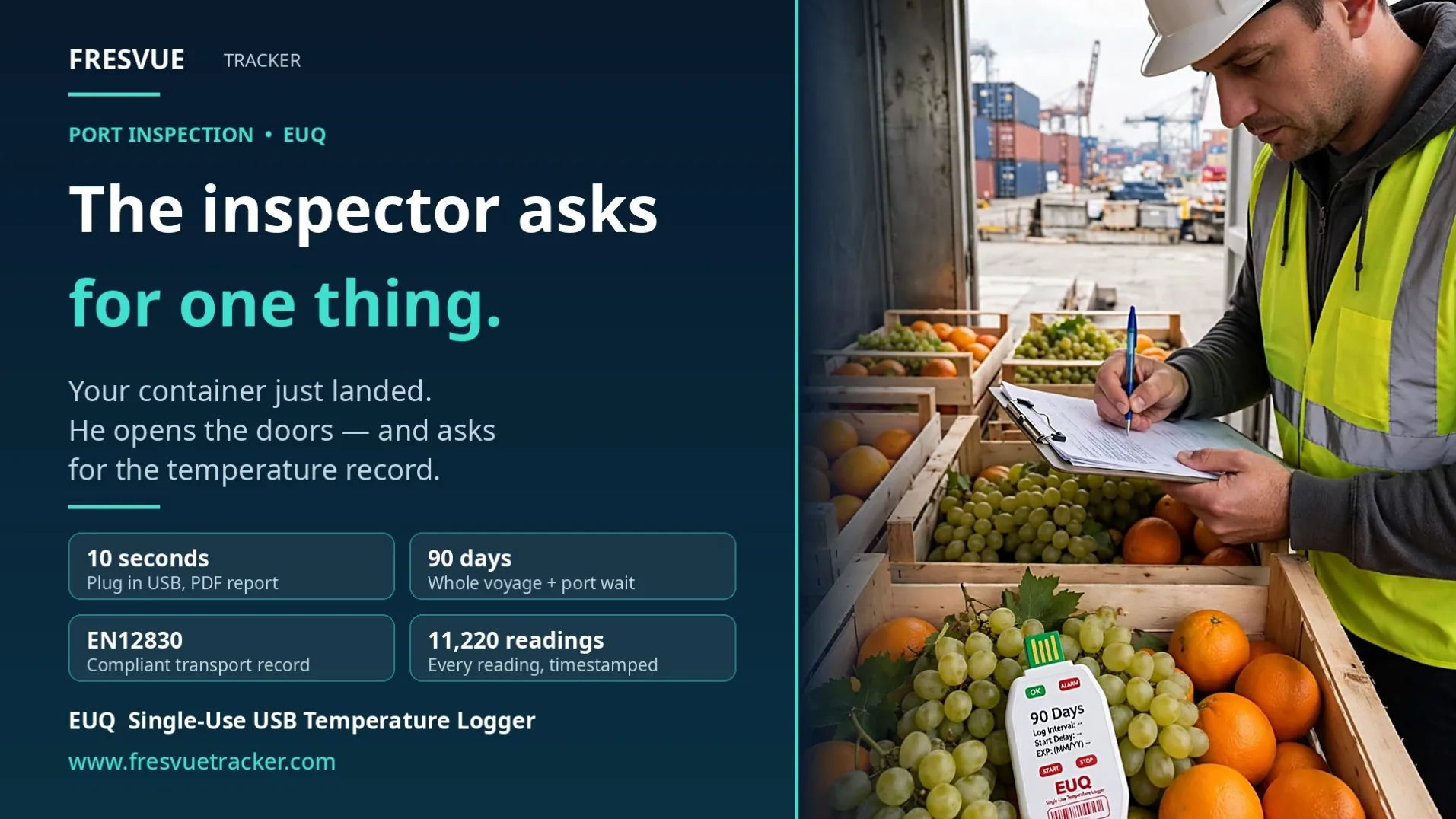
The container lands. The inspector opens the doors, looks at the fruit, and then he turns to you. "Temperature record, please."
That's the moment everything hangs on. Not the paperwork you filed weeks ago. Not the reefer printout from the shipping line. The record from inside your box. The one that says what actually happened to your fruit, hour by hour, from the day you loaded it.
And if you don't have it? He doesn't argue with you. He just doesn't clear it. The container sits. The fruit sits. The clock runs. Every day it waits at the port is a day off its shelf life, and a day of port charges you didn't plan for. Sometimes they open more boxes. Sometimes they take samples. Sometimes the buyer hears about the delay and starts asking questions of his own. All because you couldn't show one piece of paper.
Here's the thing. The inspector isn't trying to make your life hard. He's got a job to do, and his job is simple: was this fruit kept cold the whole way, yes or no? He can't tell from looking at it. Fruit looks fine right up until it doesn't. He needs the curve. The whole trip, with the times on it. And he needs it now, standing there at the container, not in an email next Tuesday.
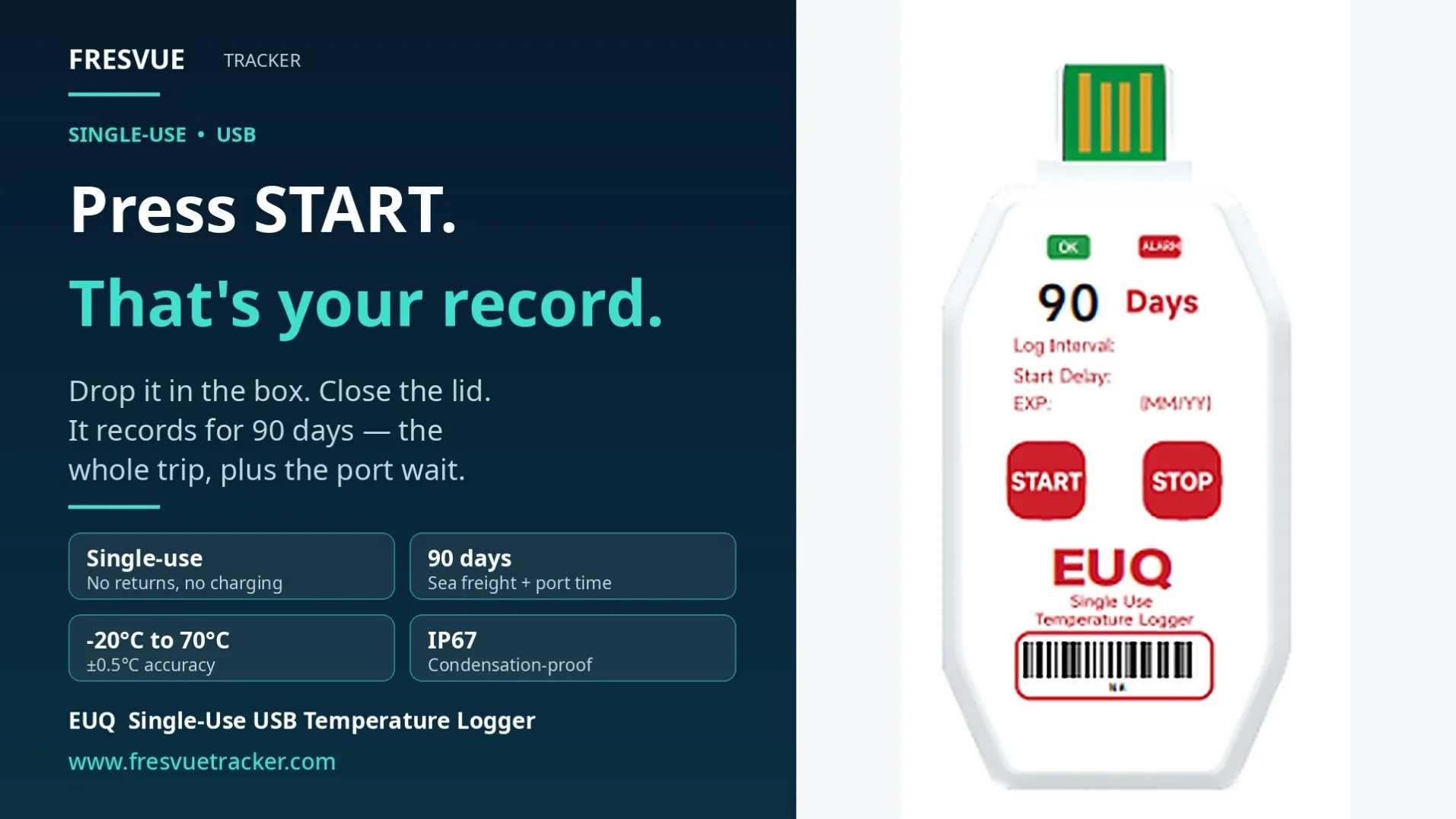
So this is what you do. Before the box leaves, press START on the EUQ and put it in with the fruit. Close the lid. Nothing else to set up. It records for 90 days — the whole voyage, plus the days your container waits at the port. It covers -20°C to 70°C at ±0.5°C, and holds 11,220 readings. IP67, so a cold box full of condensation won't hurt it. It's EN12830 compliant, so the record counts as a proper transport document. And it's powered by a Panasonic battery.
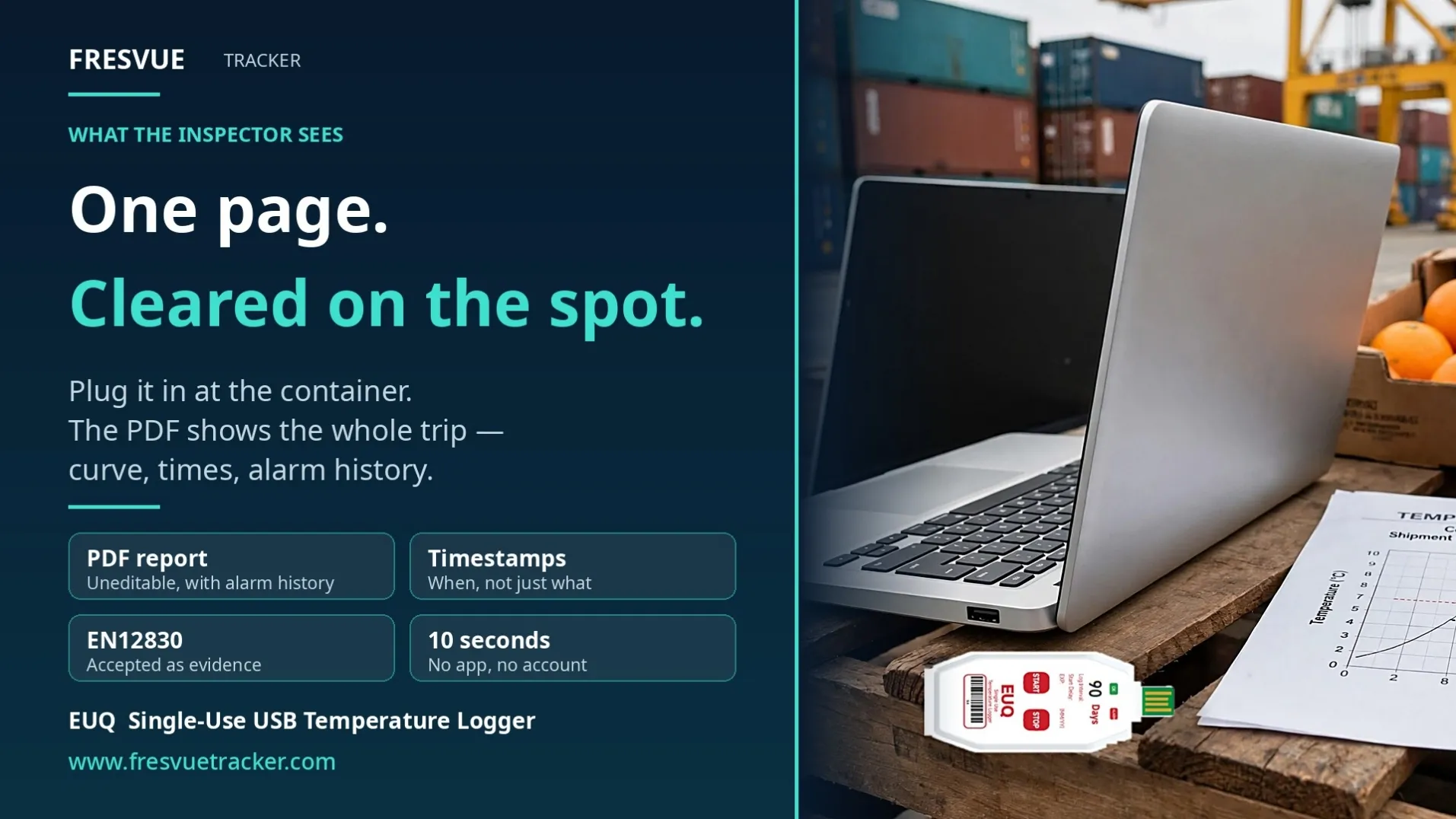
When the container lands, plug the EUQ into any USB port — his laptop, yours, it doesn't matter. Ten seconds later you've got the PDF in front of you. The whole trip, every reading, time right next to it. If the temperature went past your limit, the alarm history shows when it happened and how long it lasted. No app to install, no account to make, nothing the inspector has to learn. You hand him the page, he looks at the curve, and that's it. A flat line at 3°C from loading to landing? Cleared. A climb on day four, while the reefer was waiting at transshipment? Then at least everyone knows what happened, and the conversation is about the facts, not about whose word to take.
And it's not just the port inspector. The buyer's QC does the same thing at the warehouse. Same question, same answer, same page. One logger, one PDF, and the question gets answered the same way every time, at every stop.
That's really all it is. The inspector asks for one thing. Put it in the box before it leaves, and you'll have it in your hand when he asks.
Put one in every box, and the next time someone at the port asks for the record, you'll already be holding it.
Related reading: