Buying Guides
Fruit Arrived Spoiled. Who Pays?
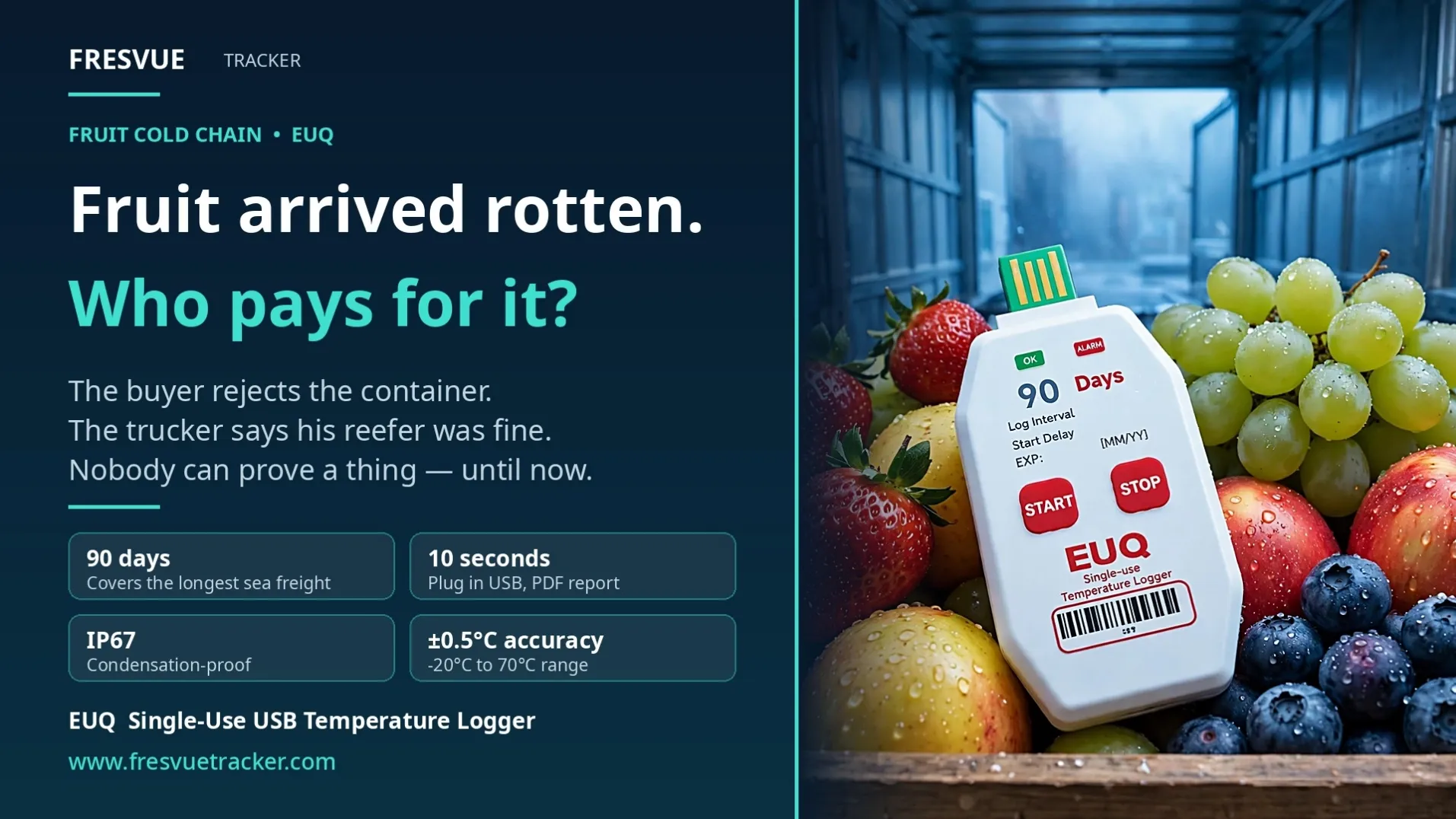
A container of fruit shows up rotten. The buyer won't pay. The trucker swears his reefer was fine. Nobody can prove anything. That's the whole problem. One logger in every box ends the fight.
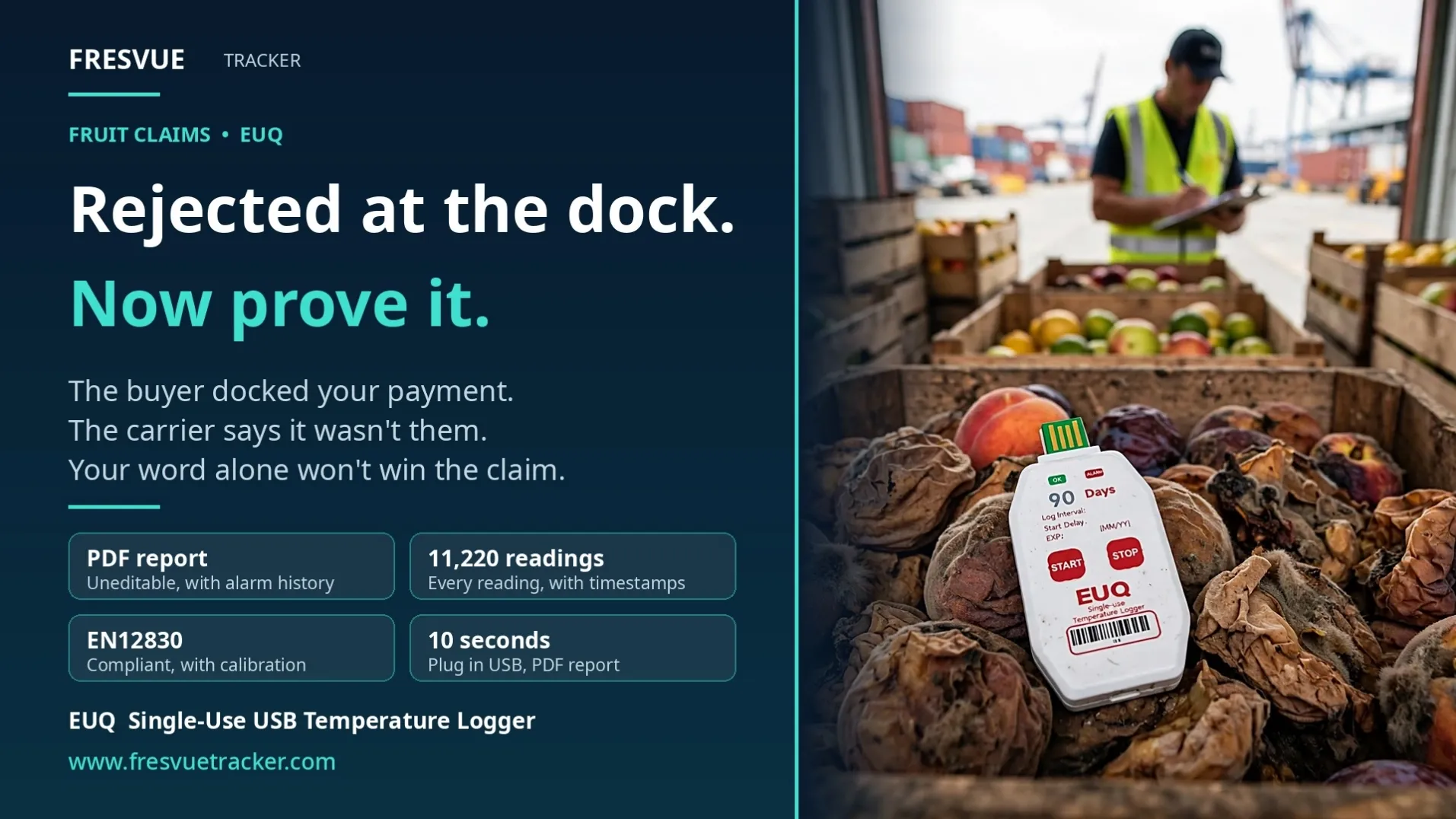
You know this phone call. The buyer opens the container, takes one look, and that's it. "We're rejecting it." Strawberries gone soft. Grapes going brown. A whole container, gone. Just like that.
So you start asking around. And what do you get? The trucker says his reefer ran at 3°C the entire way, no problem at all. The buyer says the fruit was bad before it ever left. Your packhouse says it was perfect when they loaded it.
Three stories. Zero proof. And guess who ends up paying? You. Always you.
Fruit doesn't tell you on the road
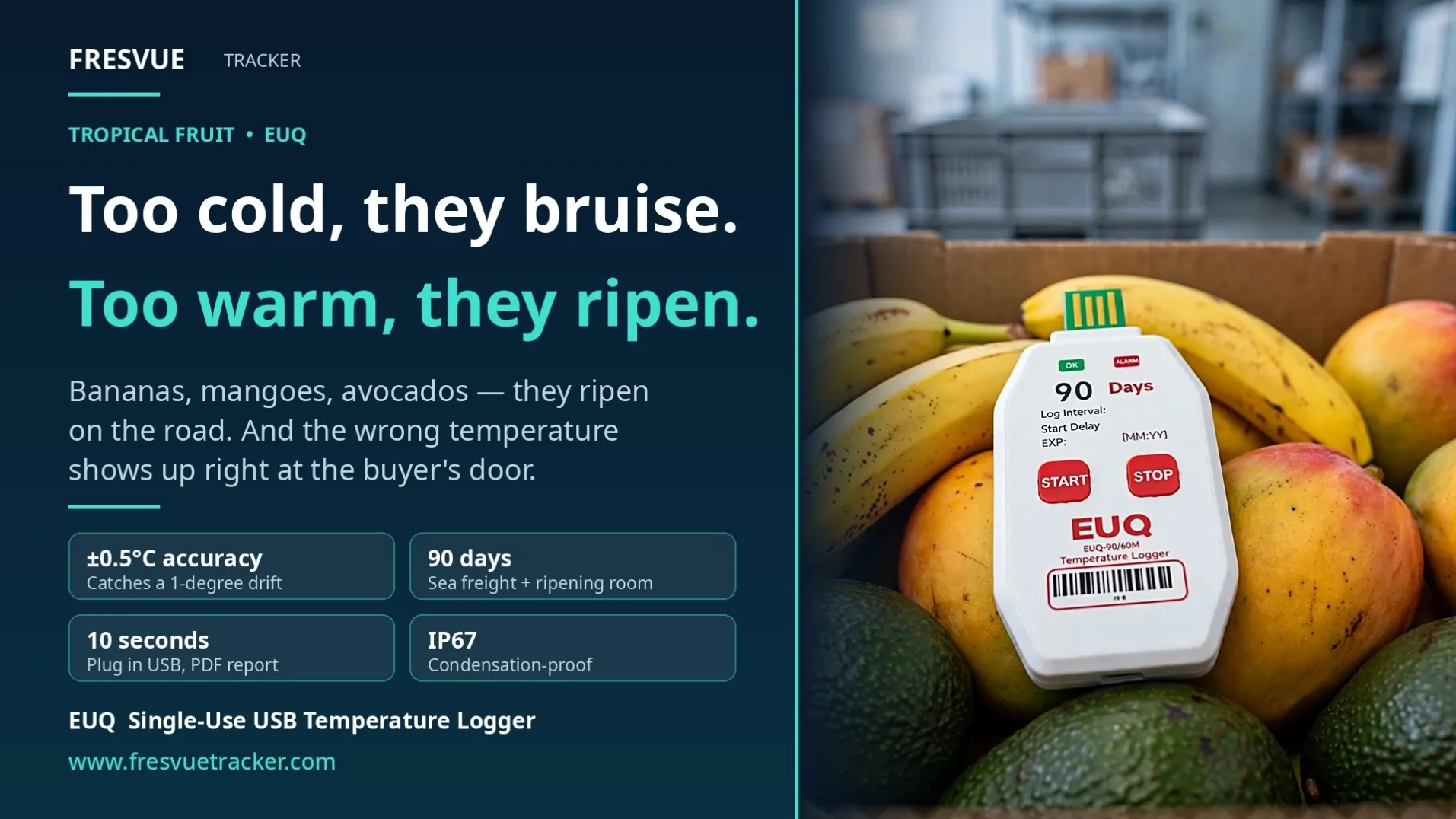
Here's the thing about fruit. Frozen meat? Easy. It arrives frozen or it doesn't — you can see it with your own eyes. Fruit doesn't work like that. It looks fine when you load it. Then it goes soft days later, at the other end, in front of the buyer.
All it takes is a few warm hours in the middle. A truck sitting at a dock. A door left open during loading. A reefer that switched itself off and nobody noticed. Nothing looks wrong on the road. The damage only shows up at the destination. By then you can't fix it. And you can't prove it either.
So the fight starts. And without proof, guess how it ends? Same way every time. You pay.
OK, so what's the fix?
Honestly? It's boring. Put a logger in the box. That's it. That's the whole fix.
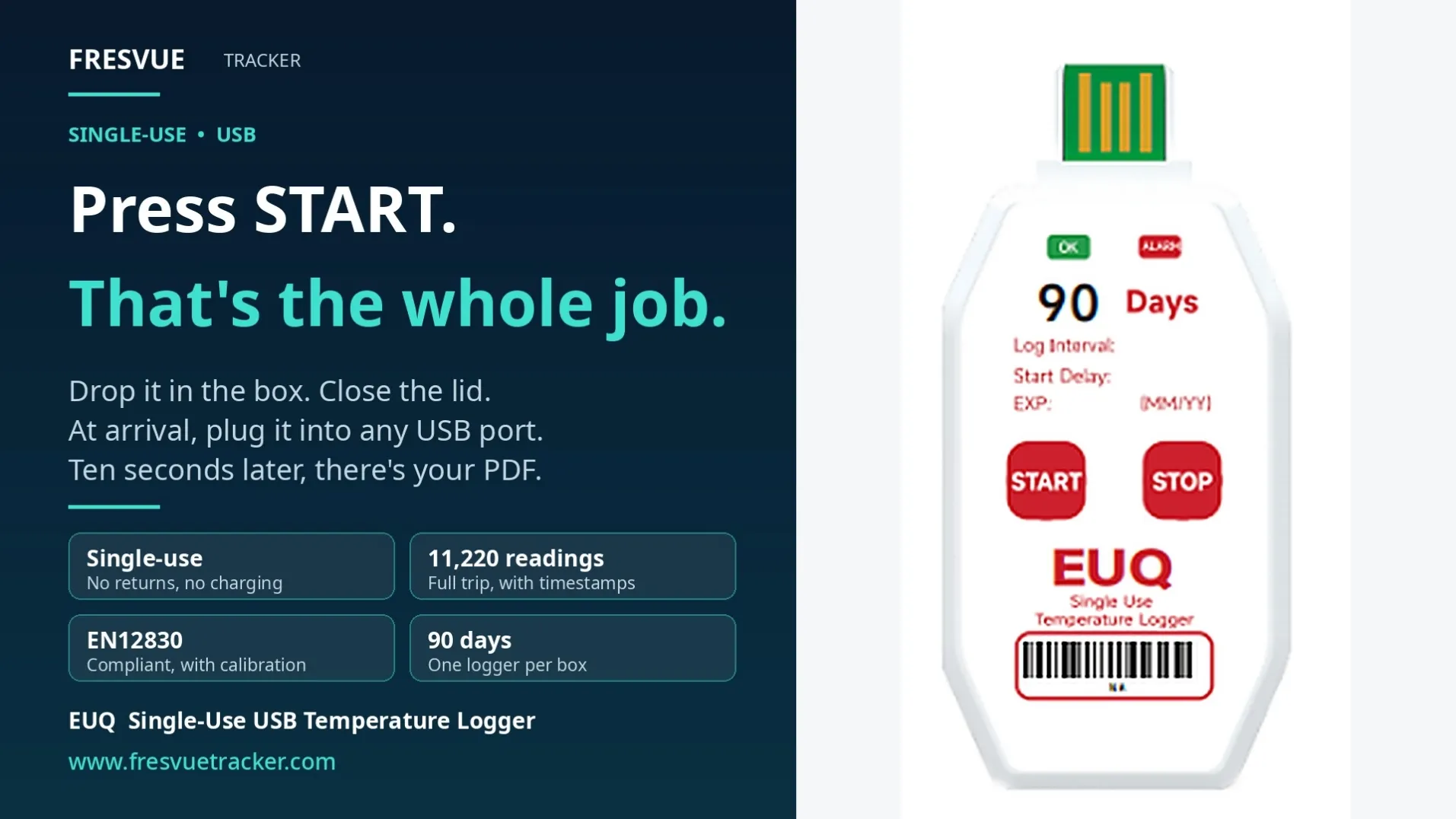
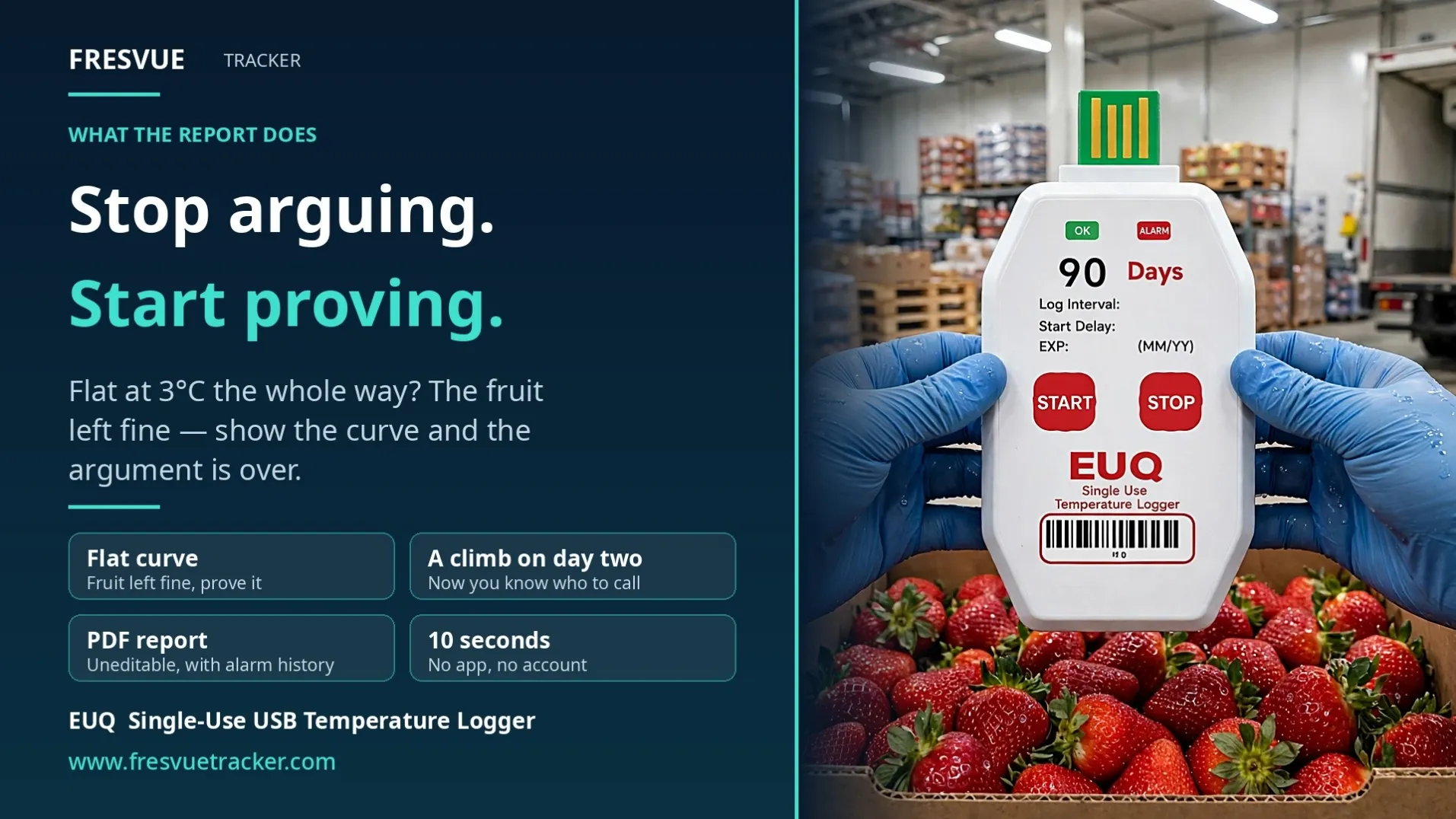
The EUQ is a single-use USB temperature logger, built for fruit boxes. You press START. You drop it in the box. You close the lid. Done. When the shipment lands, you plug it into any USB port. Ten seconds. That's all. Out comes a PDF — the whole trip, every single reading, with the times right there on it. No app to install. No account to make. And no returns, because it's single-use. Nobody has to send anything back.
It runs 90 days. That covers the longest sea freight you've got. -20°C to 70°C, ±0.5°C, 11,220 readings. IP67, so the condensation in a cold box doesn't kill it. EN12830 compliant. Panasonic battery inside.
Here's what changes when the box arrives
The buyer opens the box, plugs in the logger, and looks at the curve. Flat at 3°C the whole way? Then the fruit left fine. Whatever happened, it wasn't your fault — and now you can actually show that. See a climb on day two, while the truck was sitting at the border? Now you know exactly who to call. And you've got the paper to back you up.
That's what the report is for. Not to point fingers. To stop the fight before it even starts.
One logger in every box. One rejected container costs a whole lot more than that. Do the math yourself.
Stop arguing about whose fault it was. Put the proof in the box.