Buying Guides
A Temperature Excursion Happened. Now What?
The shipment arrived warm. Now the arguing starts — the carrier says it wasn't them, the warehouse says it wasn't them, and the batch sits in quarantine. The way out isn't a better argument.
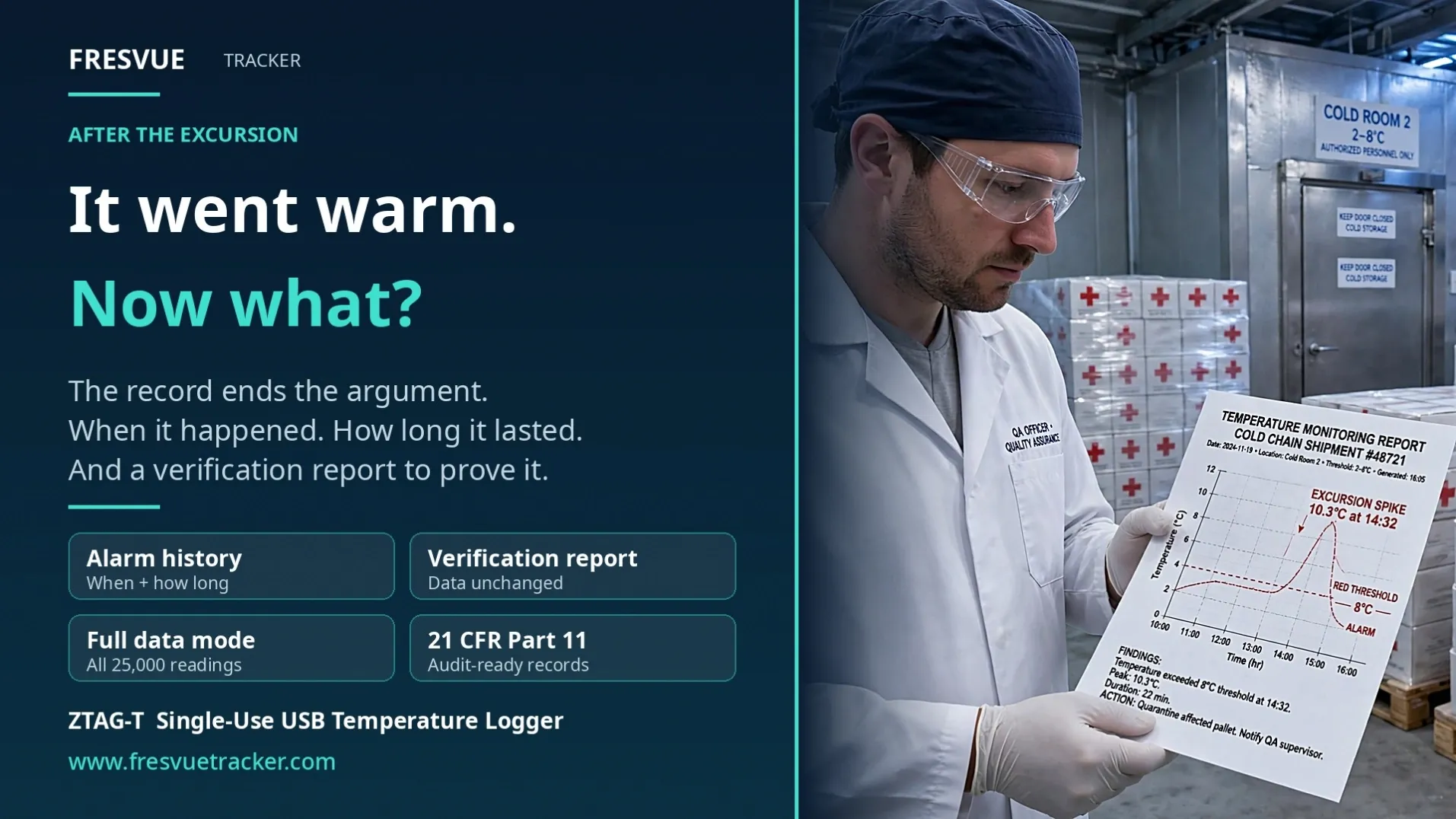
The shipment arrived warm. That's the easy part to agree on. Everything after that is an argument. The carrier says the truck was fine. The warehouse says the cold room was fine. The shipper says the box was packed right. And the batch sits in quarantine while everyone talks, because nobody can show what actually happened, hour by hour, from the day it left.
The way out isn't a better argument. It's a better record. And a better record means three things, in this order: when it happened, how long it lasted, and what the rest of the trip looked like. Not "it went over 8°C." When. Not "it was warm for a while." How long. And not just the spike — the whole curve, so you can see whether the shipment was already drifting before the spike, and whether it recovered after.
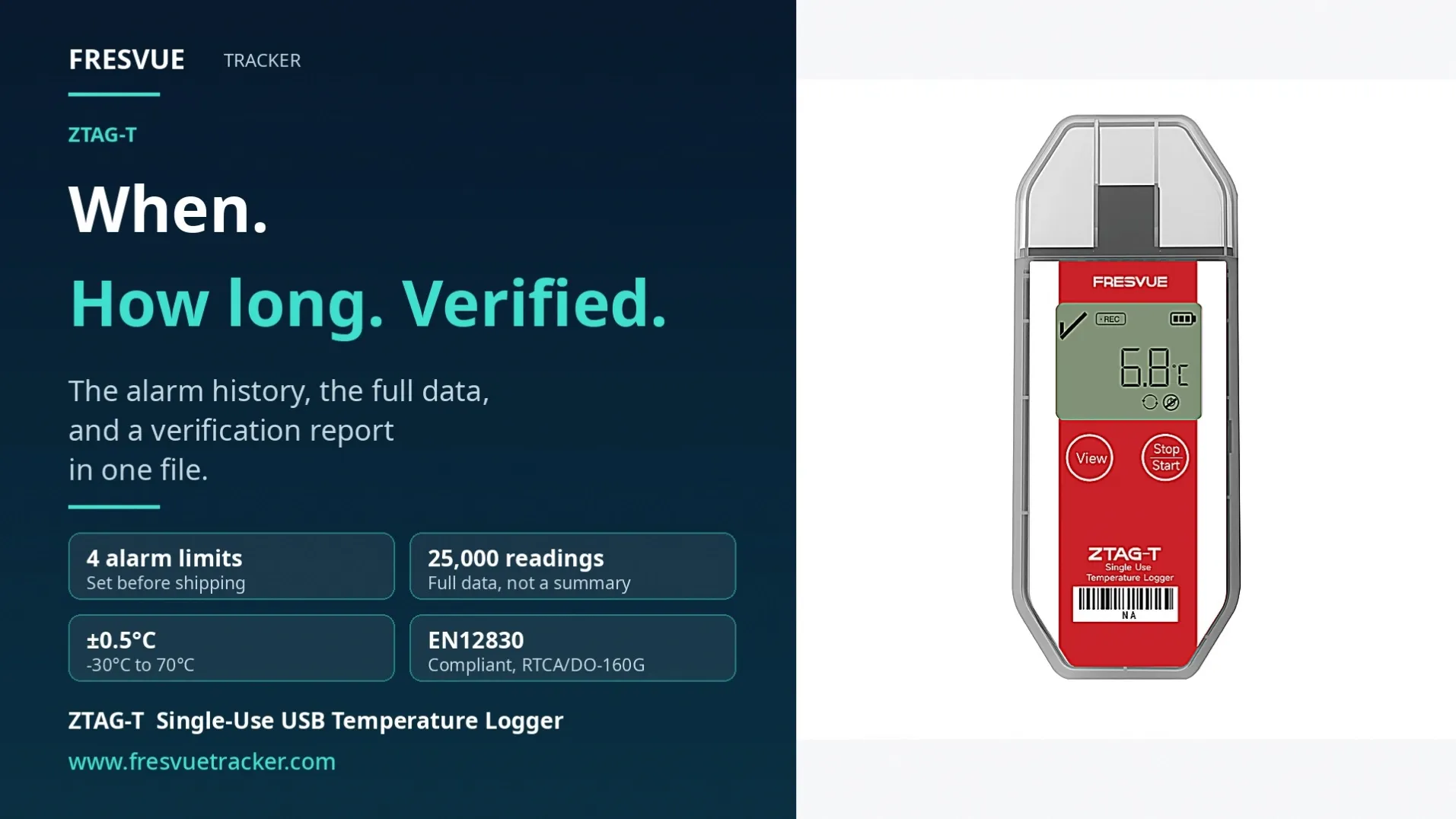
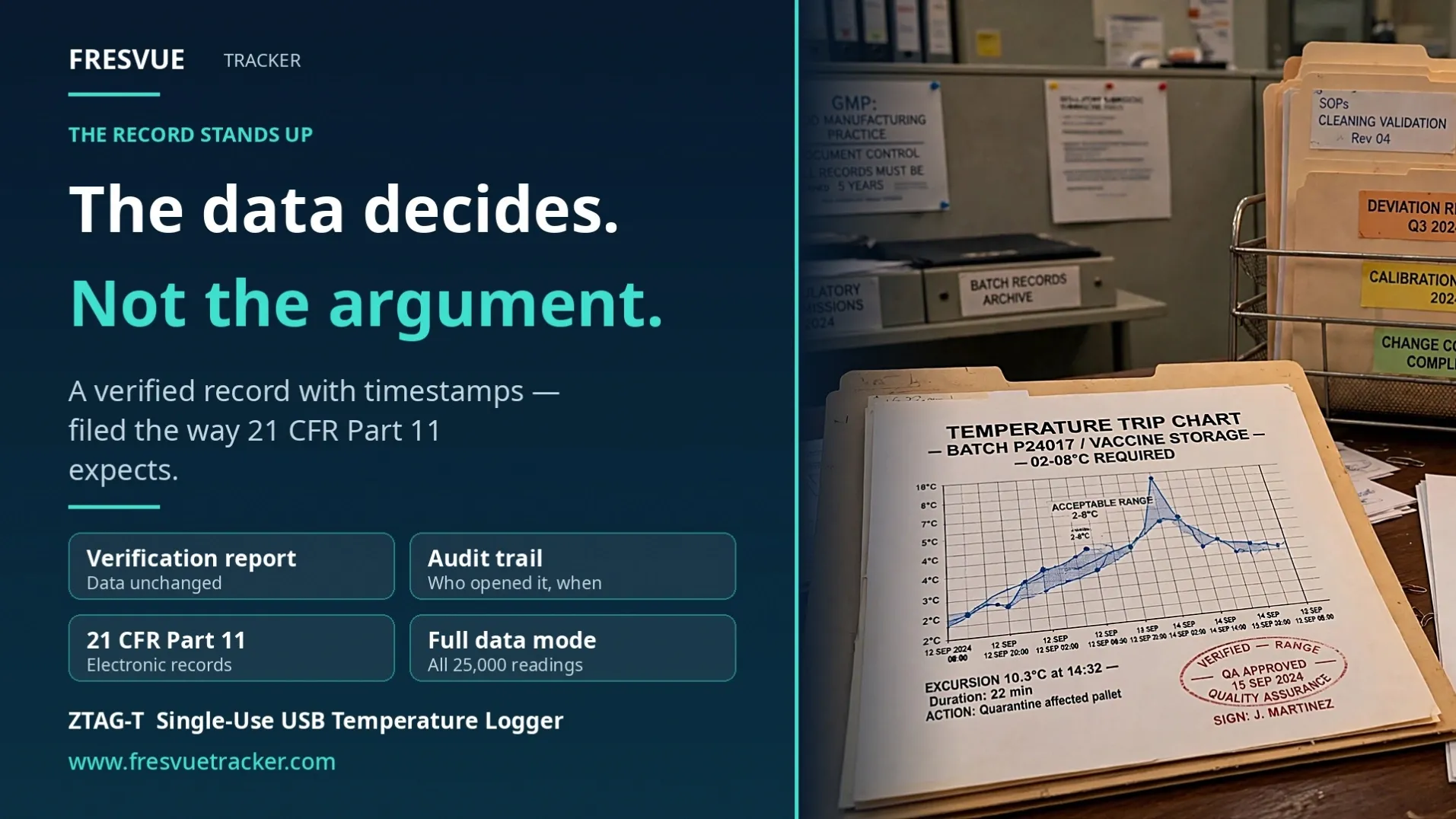
The ZTAG-T gives you all three in one file. The alarm history says when the temperature crossed each limit and how long it stayed there, with timestamps. The report carries the full data — all 25,000 readings, every one of them, not a summary — so you can see the hours before and after the excursion, not just the moment it went wrong. And built into the same file is a verification report, which says the data hasn't been changed since the logger wrote it. That's the part that ends the argument. The carrier can dispute a story. They can't dispute a verified record with timestamps.
Then the record has to live somewhere it can be found. The LoggerAnalysis software handles the records the way 21 CFR Part 11 expects — audit trails, controlled access, electronic records that hold up when an auditor asks to see them six months later. Not a PDF in someone's inbox. A filed record, with a trail of who opened it and when. That's what turns an excursion from a dispute into a file with a conclusion.
The rest is practical. The logger reads -30°C to 70°C, with ±0.5°C accuracy from -10°C to 40°C, so the excursion shows up clearly on the curve instead of hiding in rounding. You set up to four alarm limits before the shipment leaves, so the limits in the report are the limits you actually agreed on, not ones someone picked afterwards. And if you want to know mid-trip instead of at the destination, plug the logger in at a stop and pull a temporary report — the data so far, without stopping the recording — so a problem gets caught while there's still a shipment to save.
Put one in every pharma box. Excursions happen on good lanes too. The difference between a shipment that costs you a batch and a shipment that costs you a conversation is whether you can show when it happened, how long it lasted, and that the record is real. The data decides. The argument doesn't.
Related reading: