Buying Guides
Vaccines at 2–8°C: One Excursion and the Batch Is Quarantined
A vaccine shipment only has to get warm once. One excursion, and the whole batch goes into quarantine while someone figures out whether it's still good. The logger is the thing that answers it.
Vaccines live in a narrow band. Two to eight degrees, the whole way, no exceptions. That's not a recommendation. That's the condition the batch was licensed under, and once it leaves that band, nobody gets to guess whether it's still good. The batch goes into quarantine, and the people who have to decide are the ones who weren't there when it happened.
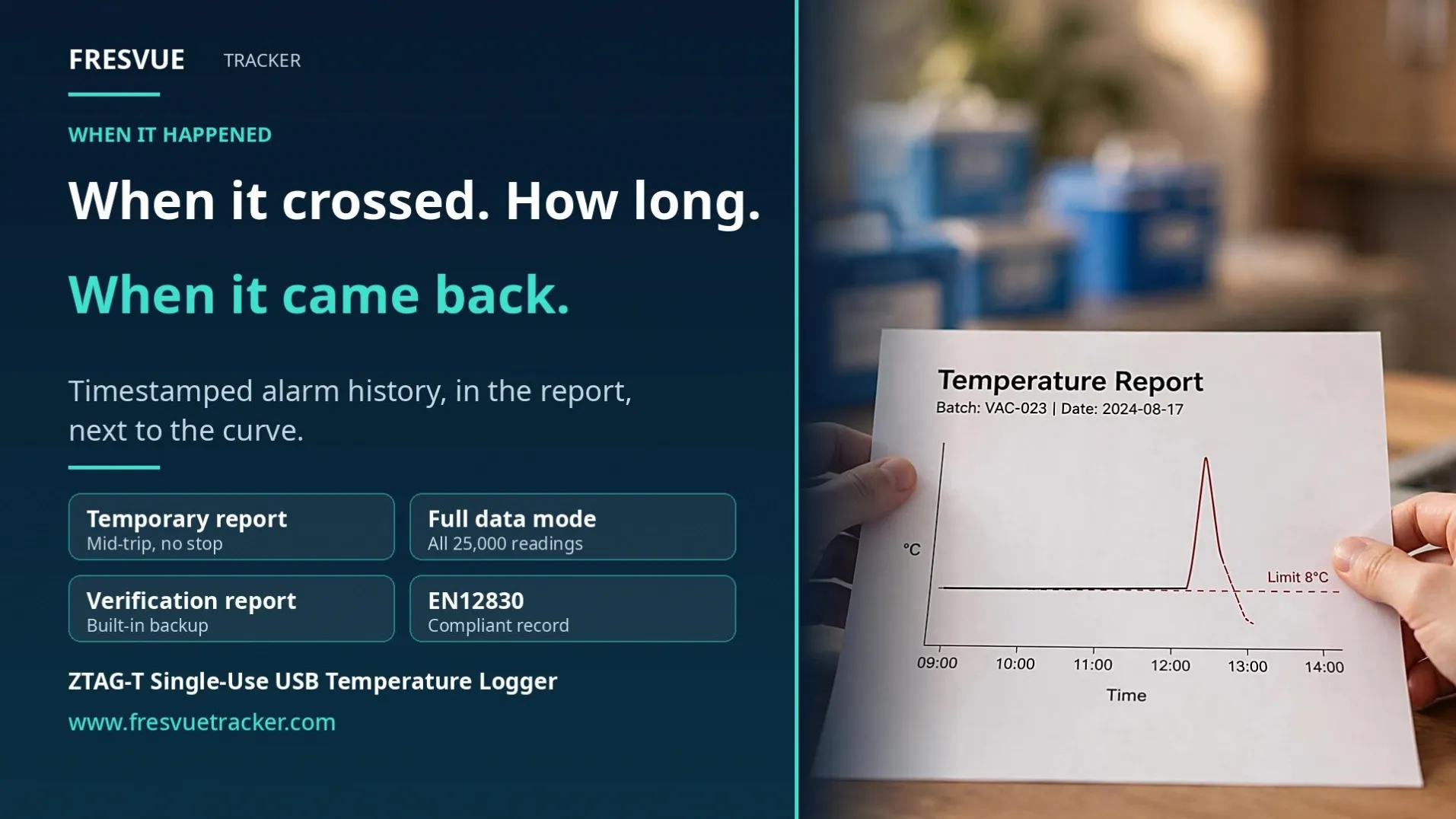
So the question after an excursion is never "did it get warm?" It's three questions, and they all need numbers. When did it cross the limit. How long did it stay there. And when did it come back. A logger that only says "it went over" doesn't help anyone decide. A logger that says "it crossed 8°C at 2:40 in the morning, stayed above for 47 minutes, and came back down by 3:30" — that's something a QA officer can actually work with.
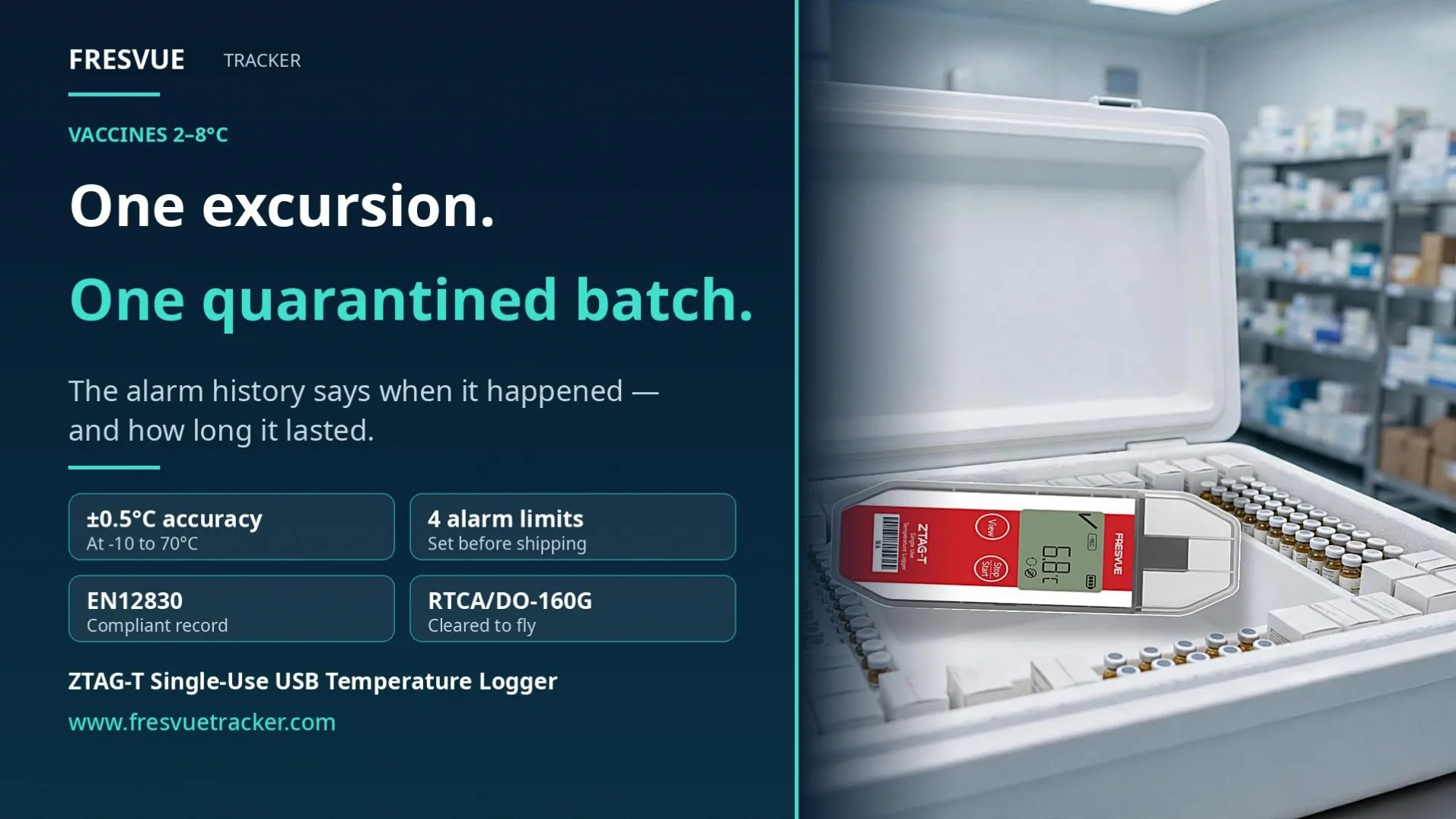
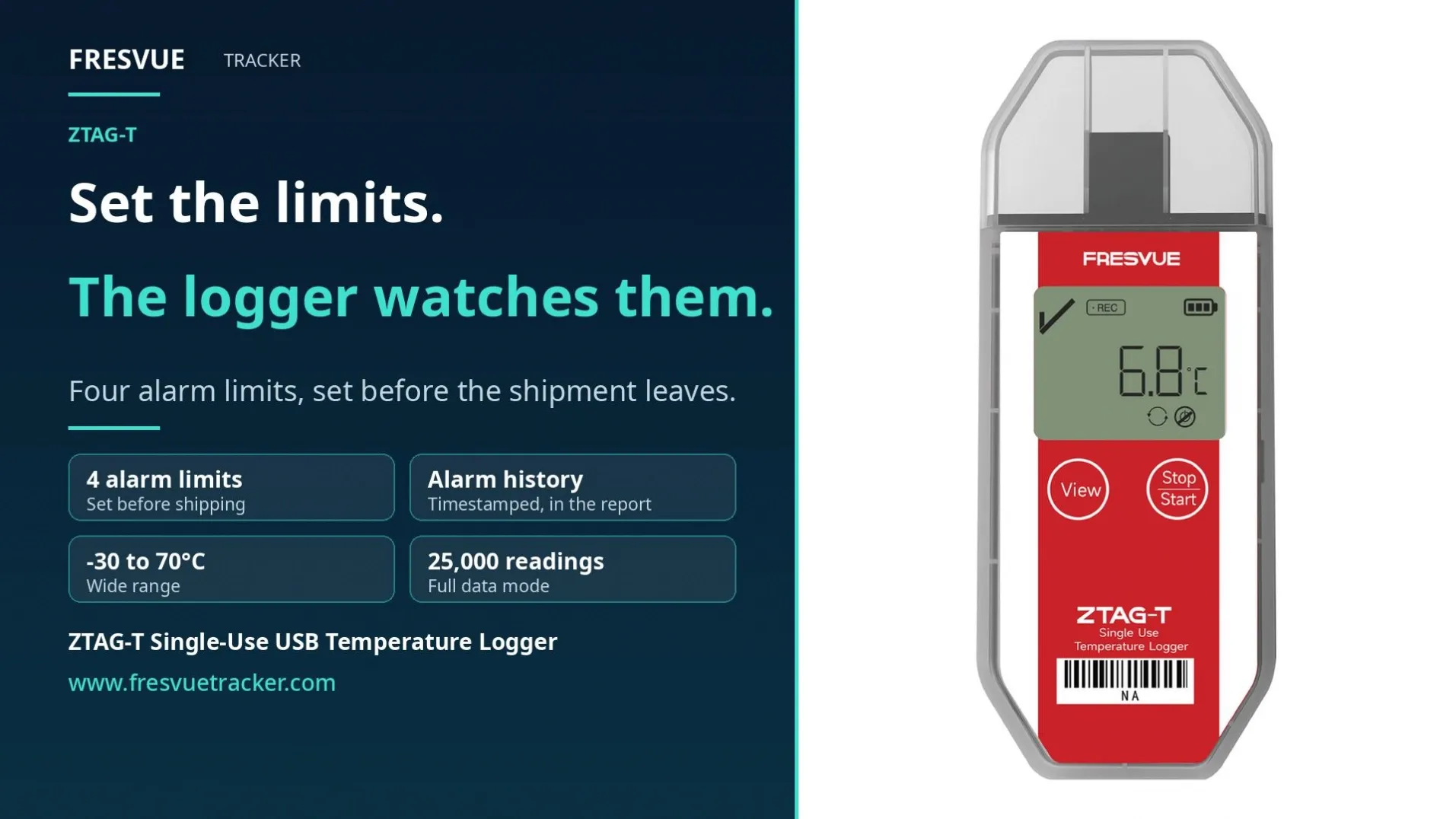
That's what the alarm history in the ZTAG-T is for. You set up to four alarm limits before the shipment leaves — 2°C at the bottom, 8°C at the top, and the trigger times you want. If the temperature crosses one, the logger records exactly when it happened and how long it lasted. Not a red light. A timestamped record, in the report, next to the curve. And the report carries all 25,000 readings, the full data, not a summary, so the QA team can see the whole trip around the excursion, not just the moment it went wrong.
There's a second thing that matters here, and it's the one people forget until they're standing at a transit hub with a shipment they can't see inside. Halfway through the trip, you can plug the logger in and pull a temporary report — an interim read of the data so far — without stopping the recording. The logger keeps going after you unplug it. So if something is already drifting at the hub, you find out there, while there's still time to do something about it, instead of finding out at the destination when the batch is already quarantined.
The logger itself is built for this lane. It reads -30°C to 70°C, with ±0.5°C accuracy from -10°C to 40°C, so 2–8°C sits comfortably inside its range, and the 0.1°C resolution means a half-degree drift shows up on the curve instead of hiding in rounding. It's EN12830 compliant, so the record counts as a proper transport document, and it's RTCA/DO-160G cleared, so it can stay recording on the plane while the vaccines fly. One click to start, a two-year battery, IP65 against condensation in a cold box. And when the shipment lands, the receiver sees the current temperature on the LCD before anything gets plugged in.
Put one in every vaccine box. Not because excursions never happen — they do, on the best-run lanes — but because when one happens, the batch doesn't have to sit in quarantine while people argue about what happened. The record says when, how long, and what the rest of the trip looked like. That's what gets a batch released, or what stops a bad one from being used. Either way, it's the data that decides, not the argument.
Related reading: