Buying Guides
The Reefer Broke at 2 a.m. Who Found Out First — You, or the Buyer?
A reefer breaks at 2 a.m. With a USB logger, nobody knows until delivery. With a 4G logger, the alert arrives the moment the temperature crosses the limit — while there is still time to act.
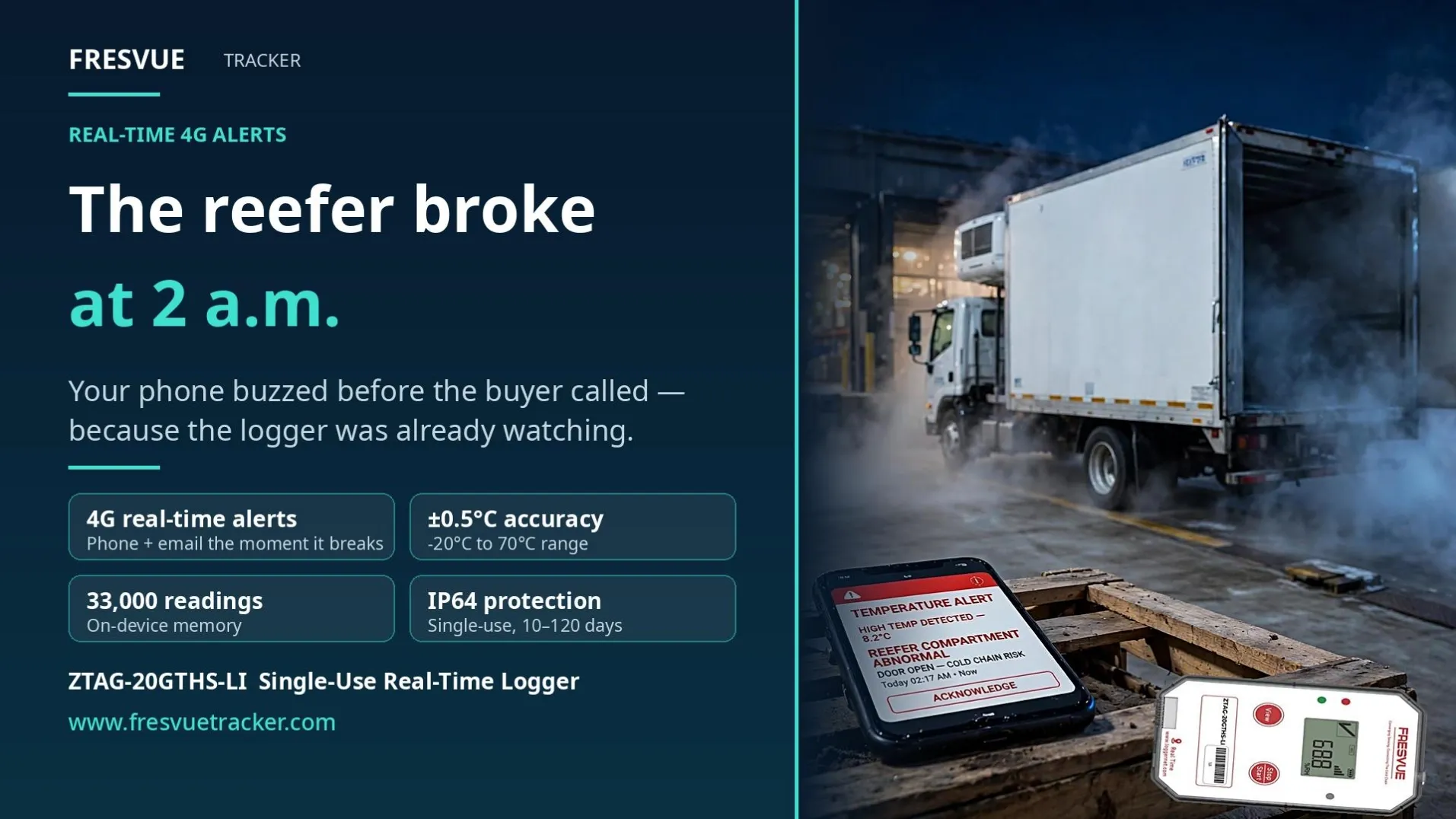
The reefer broke at 2 a.m.
The truck was on the highway, halfway between the cold store and the port. The driver was watching the road. Nobody was watching the temperature in the back, because nobody could. That is the part of a cold chain shipment that keeps shippers awake, and it is also the part nobody talks about until something goes wrong.
With a USB logger, you find out at delivery.
A USB logger records everything and tells you nothing until someone plugs it in at the other end. By then the fruit is warm, the buyer has already seen it, and the argument starts. You can show the buyer the chart and prove the temperature went up at 2 a.m., but the load is still lost. The proof comes too late to save anything.
With a live alert, you find out at 2 a.m.
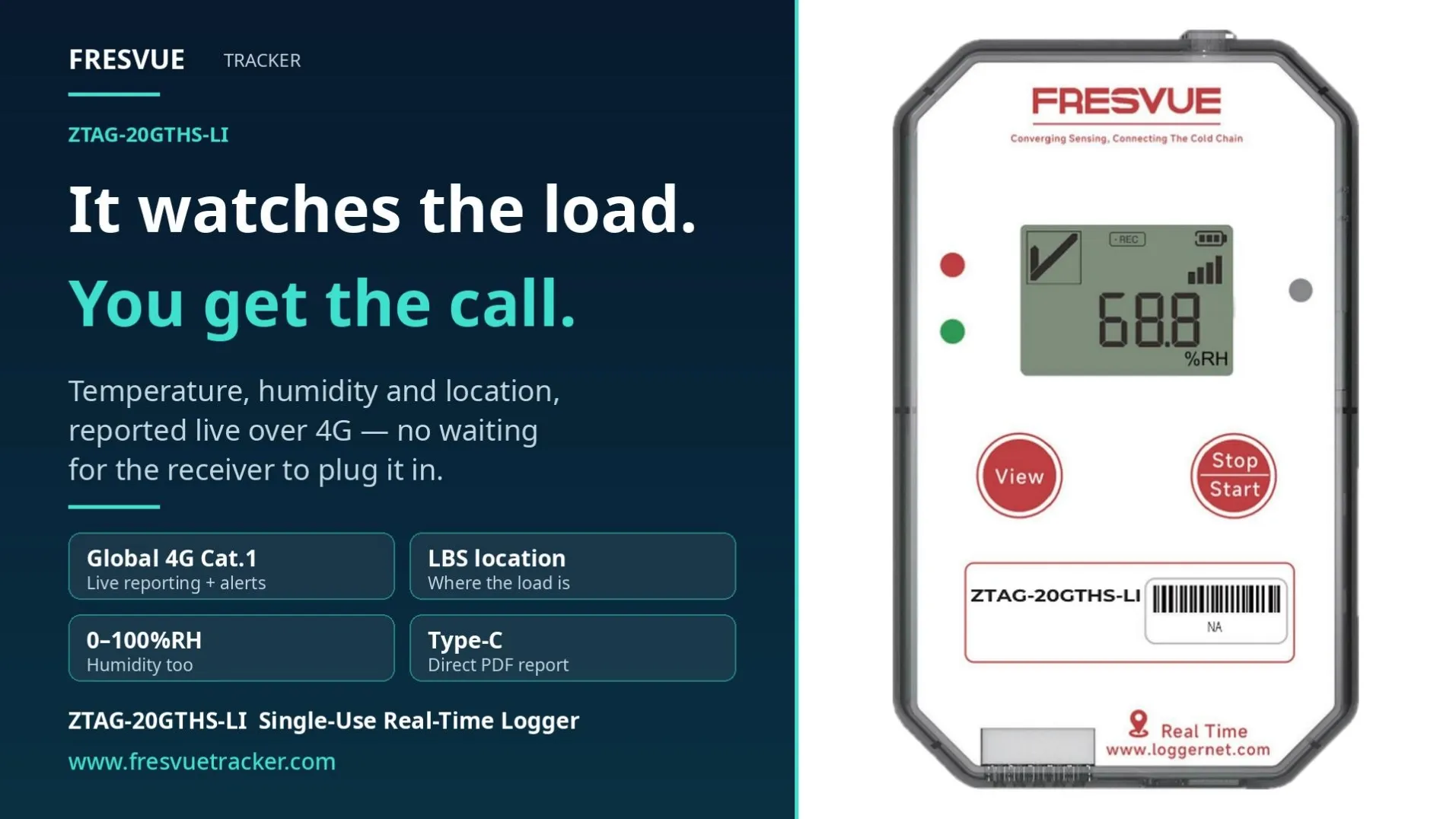
The FRESVUE ZTAG-20GTHS-LI is a single-use 4G real-time logger, so it sends the temperature, the humidity and the location to the cloud while the truck is still moving. The moment the temperature crosses the limit you set, it sends an email and an app alert. Someone's phone lights up at 2 a.m. — your phone, not the buyer's.
That is the whole difference. A 2 a.m. alert gives you hours to do something about it. You can call the driver and tell him to pull into the next service station and check the reefer. You can call the cold store and arrange a transfer to another truck. You can call the buyer yourself, before the buyer calls you, and say what happened and what you are doing about it. None of that is possible when you only find out at delivery.
The alert is not a guess. The logger reads the temperature and humidity with its own sensors, and the screen shows the current temperature and humidity, the signal, the battery and the recording status, so the driver can check it too without opening a laptop. If the driver restarts the reefer and the temperature comes back down, the cloud record shows the whole curve — when it went up, how high it went, how long it stayed there and when it came back.
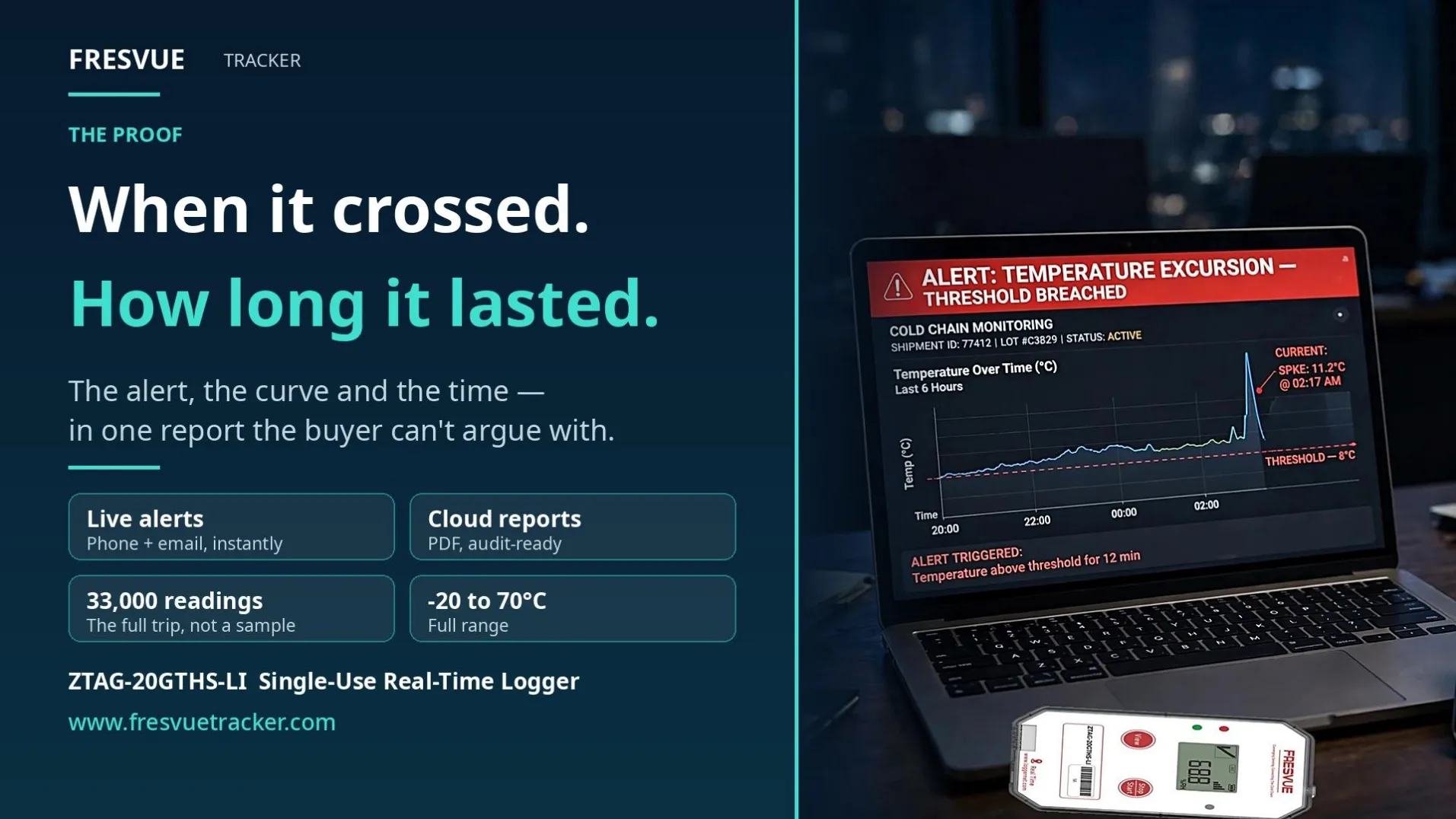
The buyer will ask what happened. The record answers.
A single-use logger fits this job because the truck does not come back. You start the logger before dispatch, put it in with the goods, and it does its work for the whole trip — the battery lasts 10 to 120 days depending on how often it reports, so a week on the road is nothing. When the shipment arrives, there is nothing to collect and nothing to return. The report is already in the cloud, and you can download the PDF from cloud.loggernet.com or the LoggerNet app.
Reefers break. That is part of the job. What changes is when you find out, and what you can show afterwards. The alert comes at 2 a.m., while there is still time to act, and the full temperature curve is waiting in the cloud when the buyer asks what happened. That is what the record is for.
Related Reading