Buying Guides
Flower Export Cold Chain: How One Temperature Logger Saved a Container of Roses
A real case: one container of roses arrived damaged, and without temperature data the exporter paid the full claim. Here is how the same exporter won the next dispute with complete cold chain records

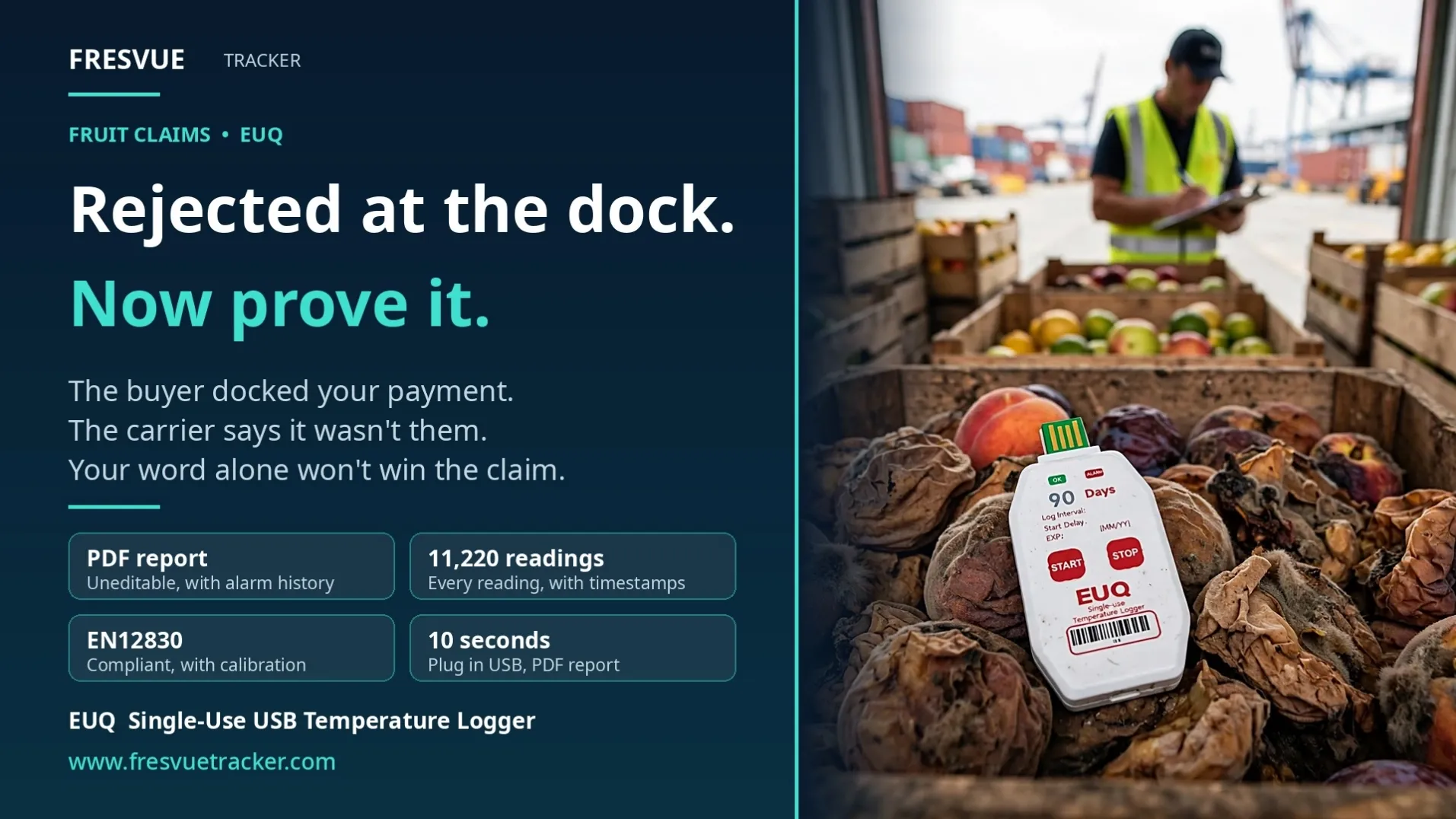
A flower exporter in Latin America once shipped a full container of roses to Europe. On arrival, some petals showed browning and shrinkage — and the buyer immediately requested compensation. Then came the question nobody could answer cleanly: who is responsible?
Without Data, Everyone Claims They Are Not at Fault
Was it poor pre-cooling by the exporter? Did the reefer container fail during the voyage? Or did unloading simply take too long on the destination side? Without temperature records, every party in the chain made the same claim: not us. The reality was harsh — the exporter could not prove innocence and had to pay most of the loss. One damaged shipment, one uncompensated claim, and a customer relationship left in dispute.
This scenario plays out constantly in floriculture. Flowers are one of the most temperature-sensitive commodities in international trade: a container of fresh roses holds tens of thousands of dollars of value, and hours above the recommended range during any leg — pre-cooling, ocean transit, port handling, last-mile delivery — quietly shortens vase life long before the damage becomes visible.
One Small Device Changed Everything
The same exporter later placed a temperature logger in every shipment. A few months later, a similar complaint happened again. But this time, he presented complete temperature records:
Temperature remained stable at 0.5–1°C throughout the entire shipment.
The container was exposed to high temperatures for four hours during unloading at the destination port.
With data, responsibility became crystal clear. The loss was billed to the logistics provider — not the exporter. He kept both his profit and his reputation.
Cost vs Value: A Logger Is Cheaper Than One Claim
The exporter later summed it up with a sentence many in the industry now repeat: "A temperature logger is not an expense — it keeps me from losing money." The math is one-sided. One logger costs about the same as a few dozen dollars; one container of flowers can be worth tens of thousands. And when a dispute happens, the temperature record becomes the strongest piece of evidence either side can present — an unbiased account of exactly what the cargo experienced, and when.
Where to Place Loggers in a Flower Shipment
For exporters and cold chain logistics providers handling flowers, three placement points cover the risk:
Inside the packing zone — one logger per pallet or per container section, placed at cargo level rather than on the wall, so it reads what the flowers actually experience.
On long-haul legs — ocean and reefer containers benefit from loggers with long battery life and, ideally, live visibility so excursions surface mid-journey instead of at the destination.
At handover points — the highest-risk moments are transfers between parties. A logger that records continuously through each handover removes every "it was fine when it left us" argument.
Choosing the Right Logger for Flower Shipments
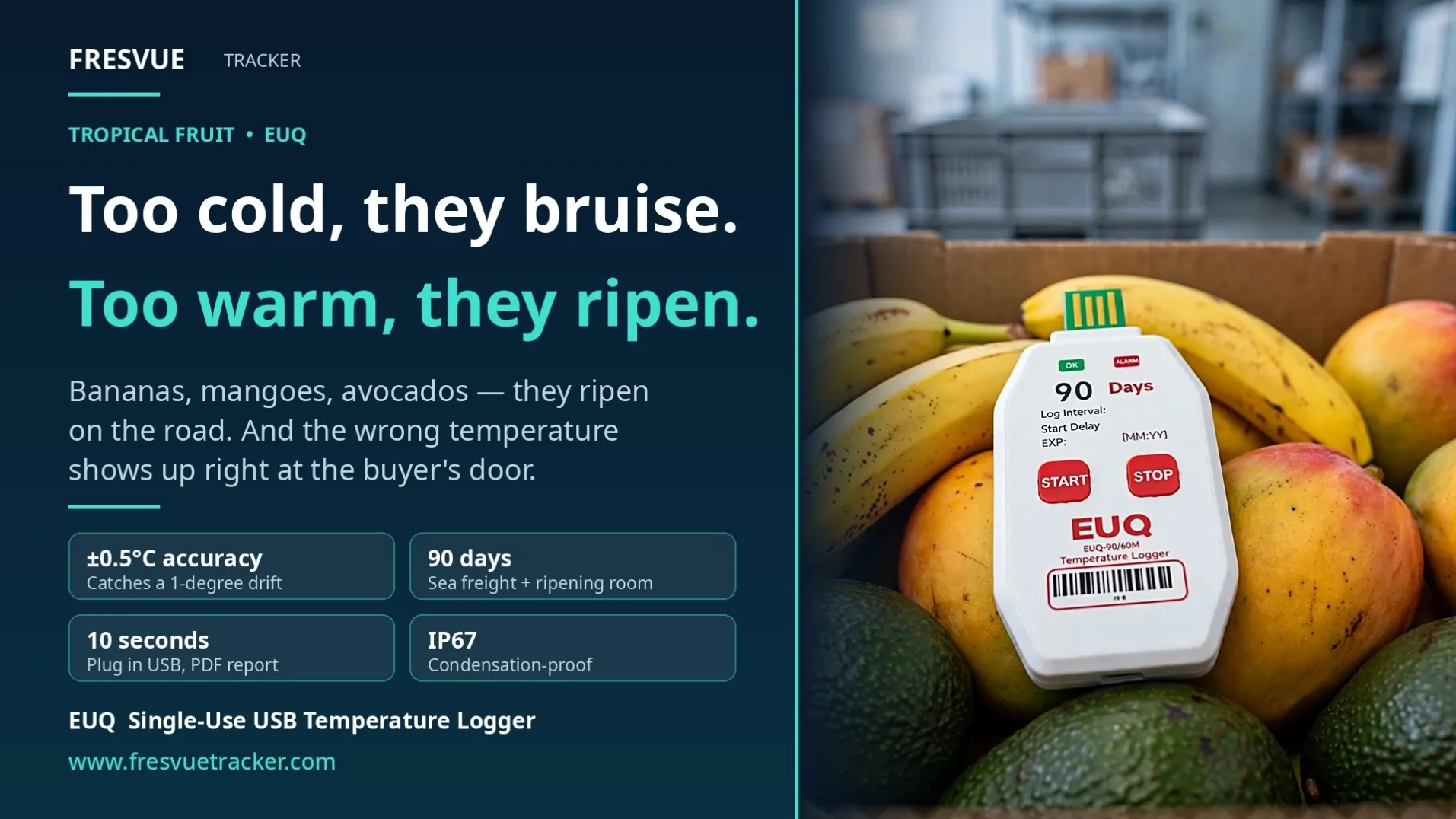
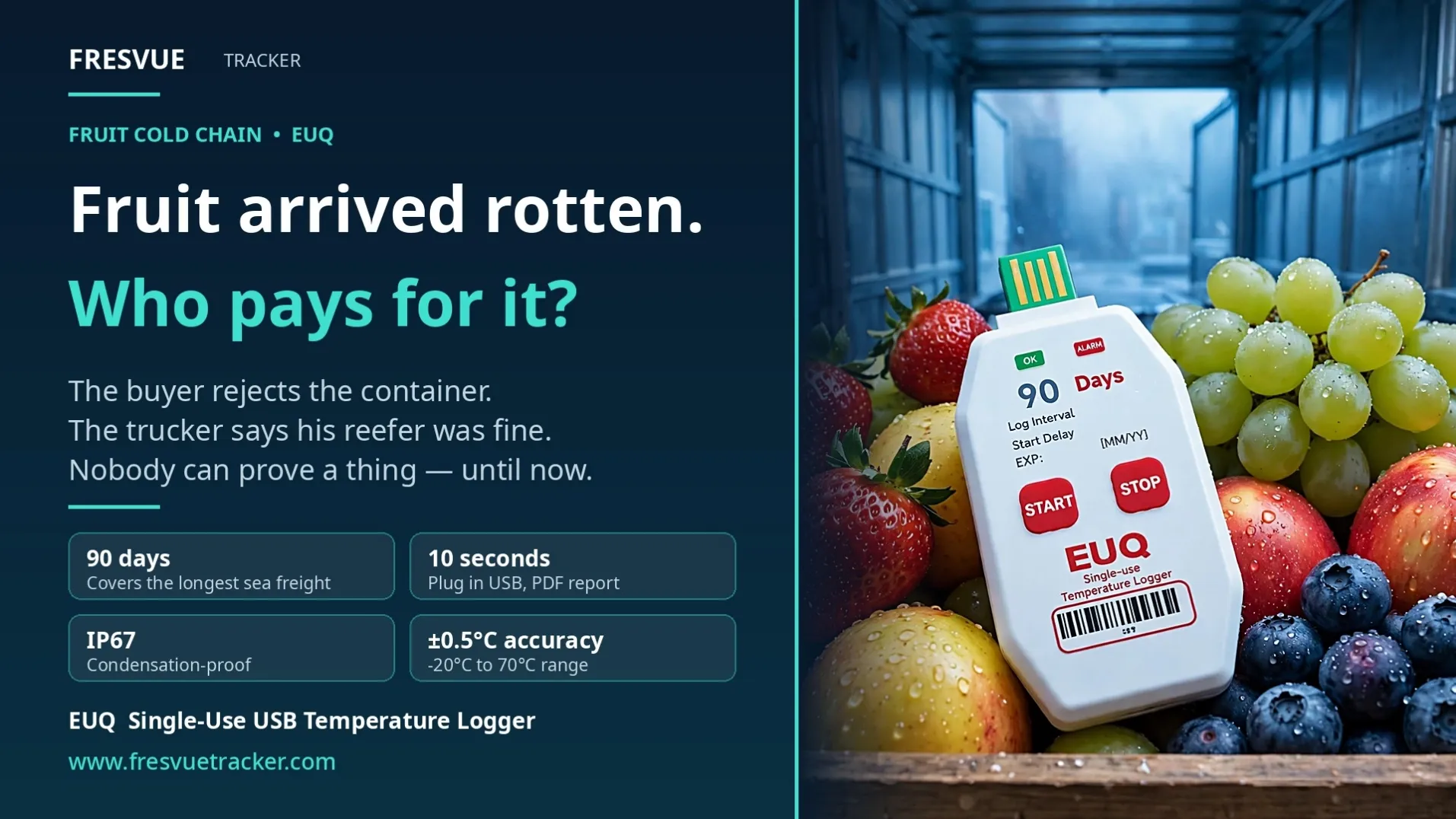
For sea freight and long transit times, a single-use USB logger with a long recording life keeps things simple — place it in the box, download the report on arrival. The ZTAG-EU single-use USB temperature data logger records up to 180 days, which comfortably covers door-to-door flower shipments, and plugs directly into a computer to generate the report — no cables, no software.
For high-value or compliance-heavy consignments, real-time visibility adds another layer: the ZTAG-20GTH-LI reports temperature and humidity live over 4G with location tracking, so an excursion during unloading or port delays triggers an alert while there is still time to act. Our fresh produce cold chain guide covers the full workflow from pre-cooling to arrival, and more field results like this one are collected in our cold chain case studies.
Do Not Wait for a Loss Before You Start Collecting Proof
If you are an exporter, importer, or cold chain logistics provider: place a logger before shipping. You are not just protecting your own cargo — you are giving every party in the chain the confidence to settle claims fairly, based on facts instead of finger-pointing. Cold chain success does not depend on luck. It depends on data. Contact FRESVUE for the full catalog and a one-on-one consultation — let the numbers protect your partnership.