Buying Guides
Bananas, Mangoes and Avocados: Why Tropical Fruit Needs Its Own Temperature Proof
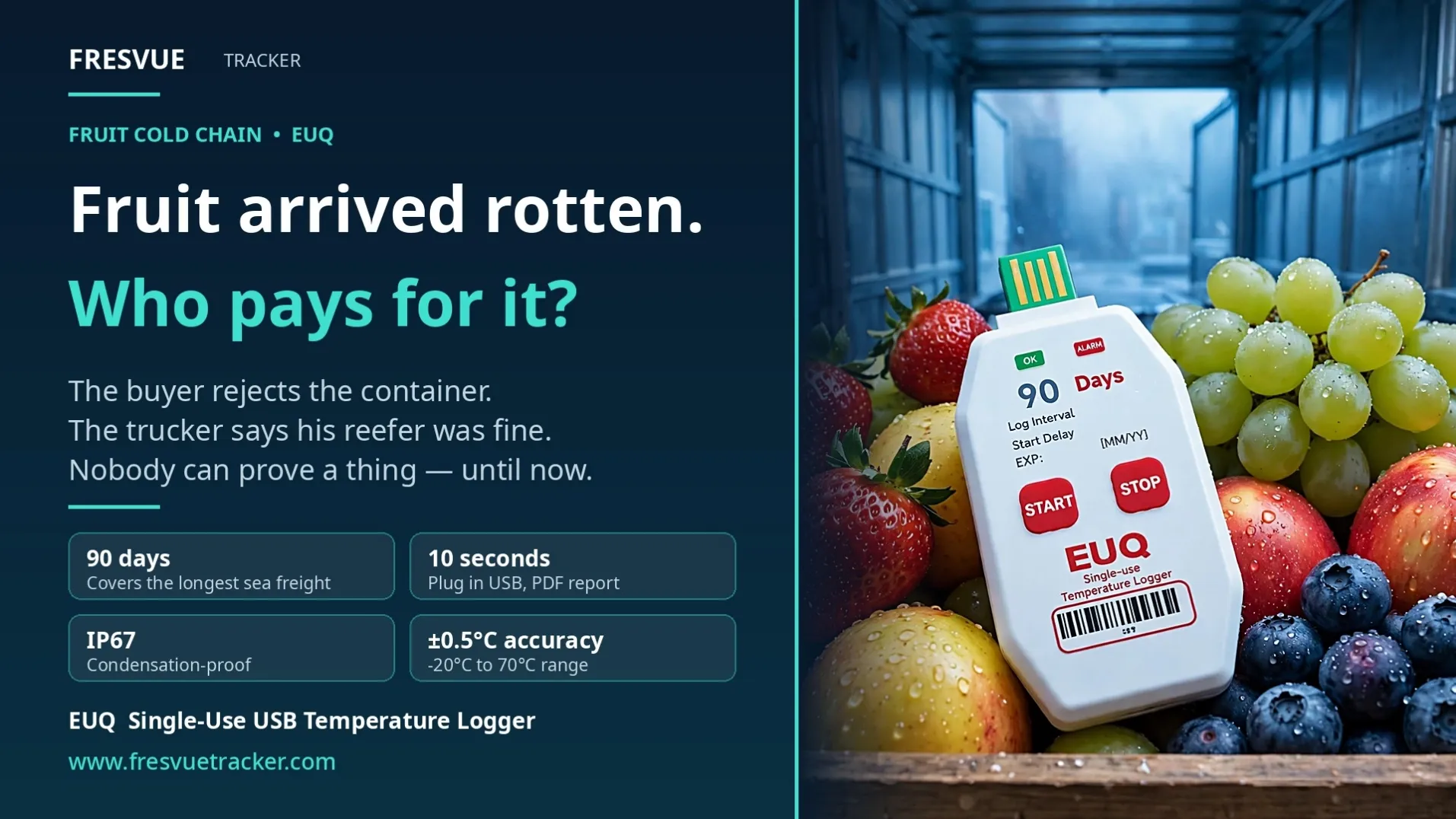
Bananas, mangoes and avocados keep ripening on the road. Too cold and the skin goes black. Too warm and they arrive overripe. One logger in the box shows exactly what happened — and who should pay.
You ship bananas. Or mangoes. Or avocados. And you already know the problem: this fruit doesn't sit still.
An apple just sits there. Tropical fruit doesn't. It keeps ripening — on the truck, on the ship, in the warehouse. Every hour, the colour changes a little, the flesh gets a little softer. And temperature decides how fast.
So it's not just “keep it cold.” It's “keep it right, the whole time.”
Too cold is just as bad as too warm
Here's the part people get wrong. They think colder is safer. With tropical f
ruit, it isn't.
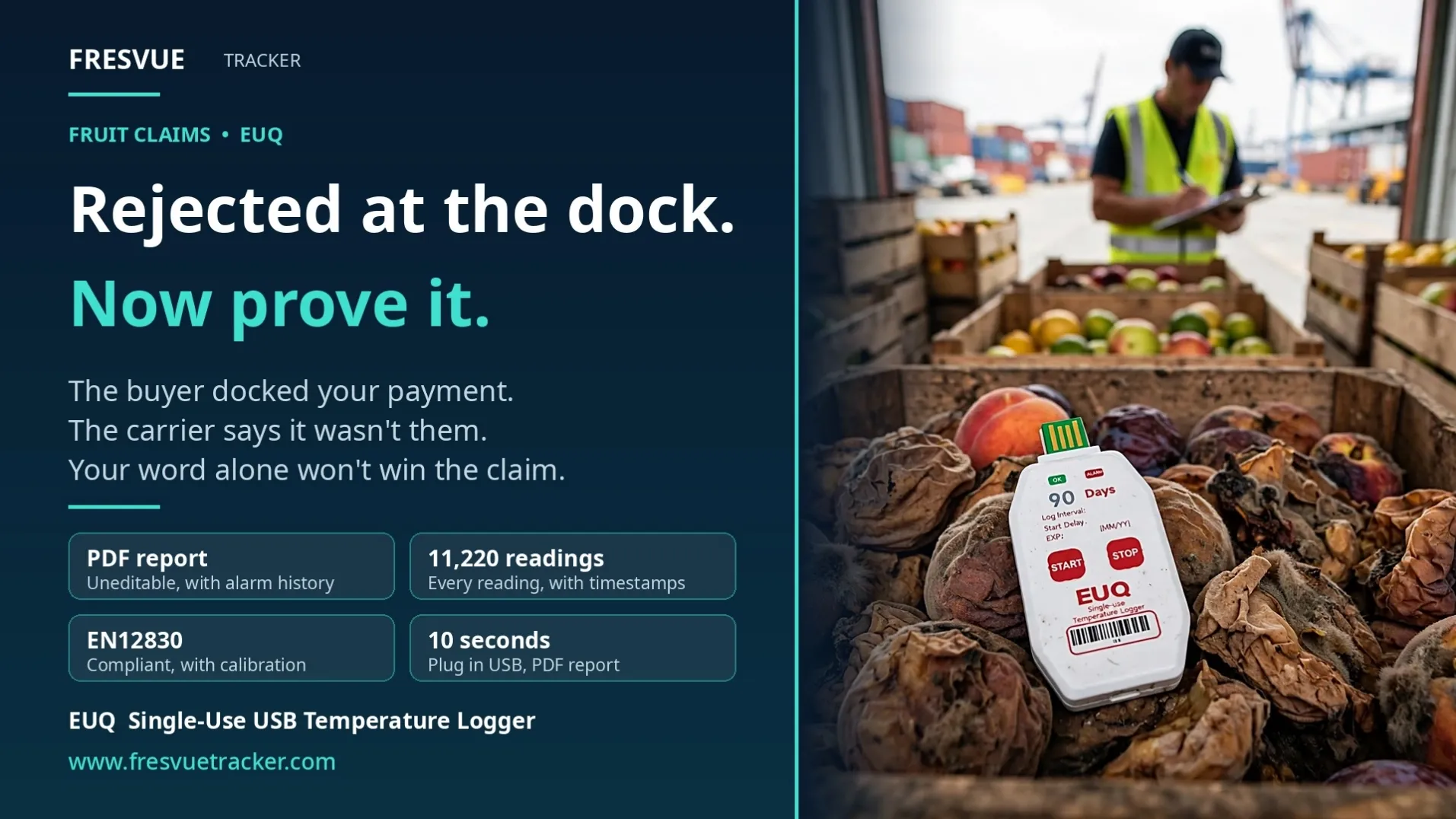
Send bananas too cold and the skin goes black. Not rotten — black. The fruit inside might be fine, but nobody buys a black banana. Mangoes get dark patches and a dull, grey look. Avocados go brown inside, where you can't even see it until the buyer cuts one open.
Too warm is the other side. A few warm hours and the whole box ripens at once: mangoes arrive soft, avocados arrive ready to eat three days too early, bananas turn yellow in the container and reach the shelf spotted and done.
And the worst part: it all looks fine when you load it. Green bananas, hard avocados, firm mangoes. The damage only shows up days later, at the other end. Was it your cold store? The truck? The ship? The ripening room?
No proof. Just a fight. And guess who pays.
So how do you catch a one-degree slip?
You can't watch the fruit. It's in a sealed box, on a ship, for weeks. What you can watch is the temperature — every reading, with the time next to it. That's the whole trick.
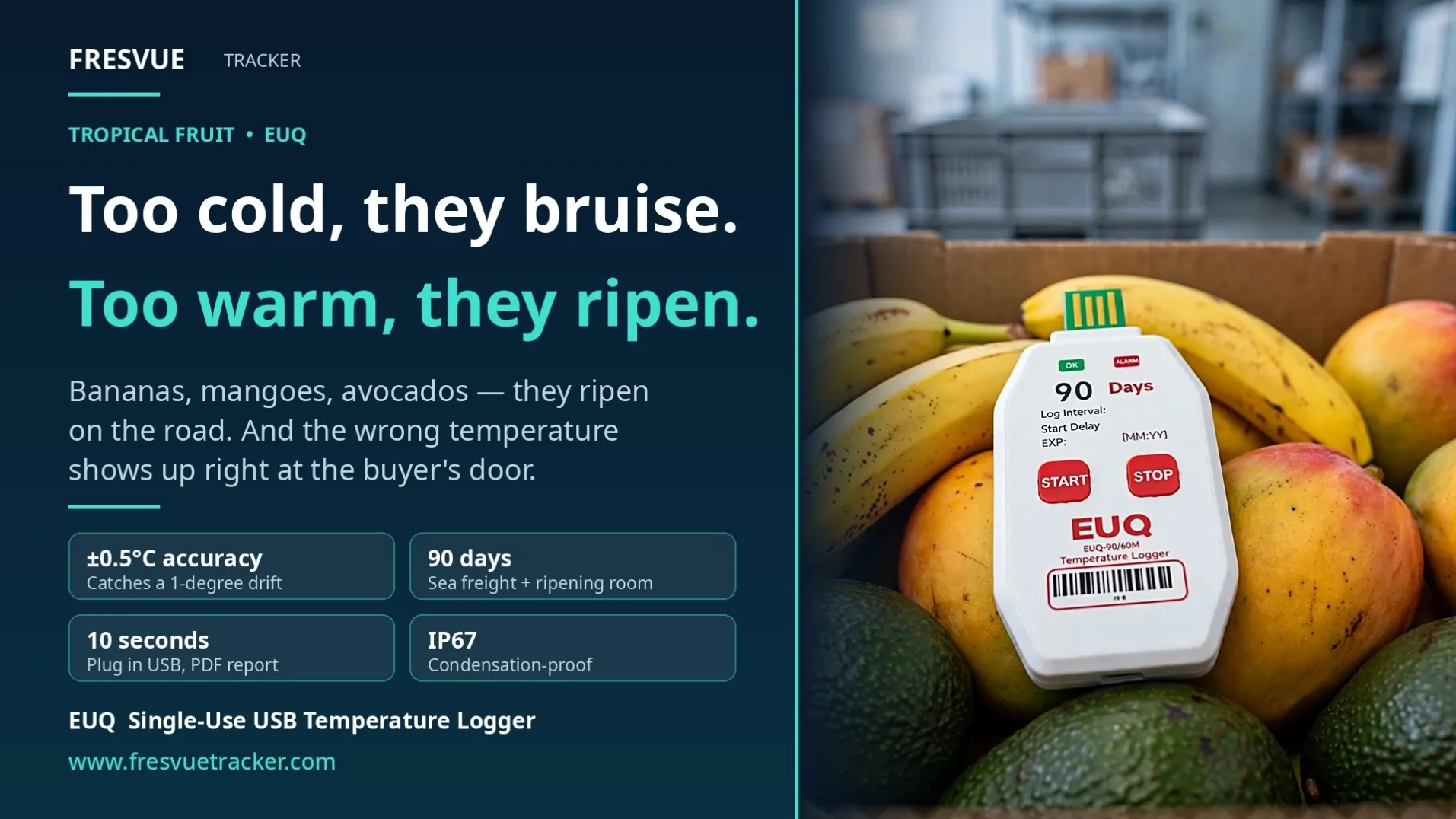
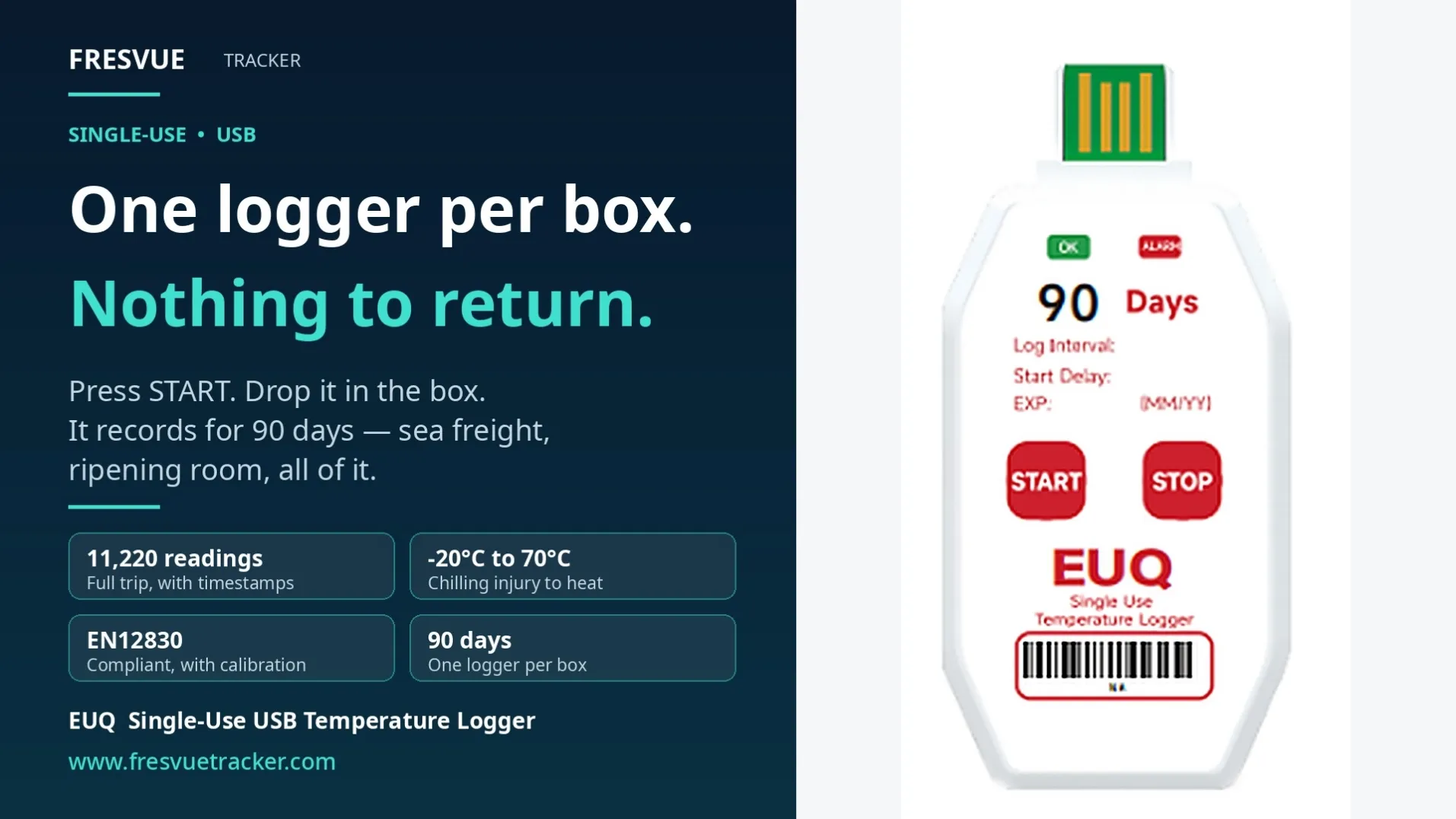
The EUQ goes in the box with the fruit. It's a single-use USB logger, made for this. Press START, put it in, close the lid. That's the job. Ninety days of battery, so it covers the sea freight and the ripening room after. -20°C to 70°C, 11,220 readings, IP67 against the condensation, EN12830 compliant, Panasonic battery.
When the box lands, plug it into any USB port. Ten seconds later you've got the PDF: the full trip, reading by reading. No app, no account, no returns to chase — it's single-use.
Here's why the ±0.5°C matters for this fruit and not just on paper. A banana box held at 13°C arrives green and perfect. The same box at 11°C comes out black-skinned. Two degrees. You can't feel that with your hand, and you can't see it until it's too late. A logger that reads to half a degree can.
What the curve says at the door
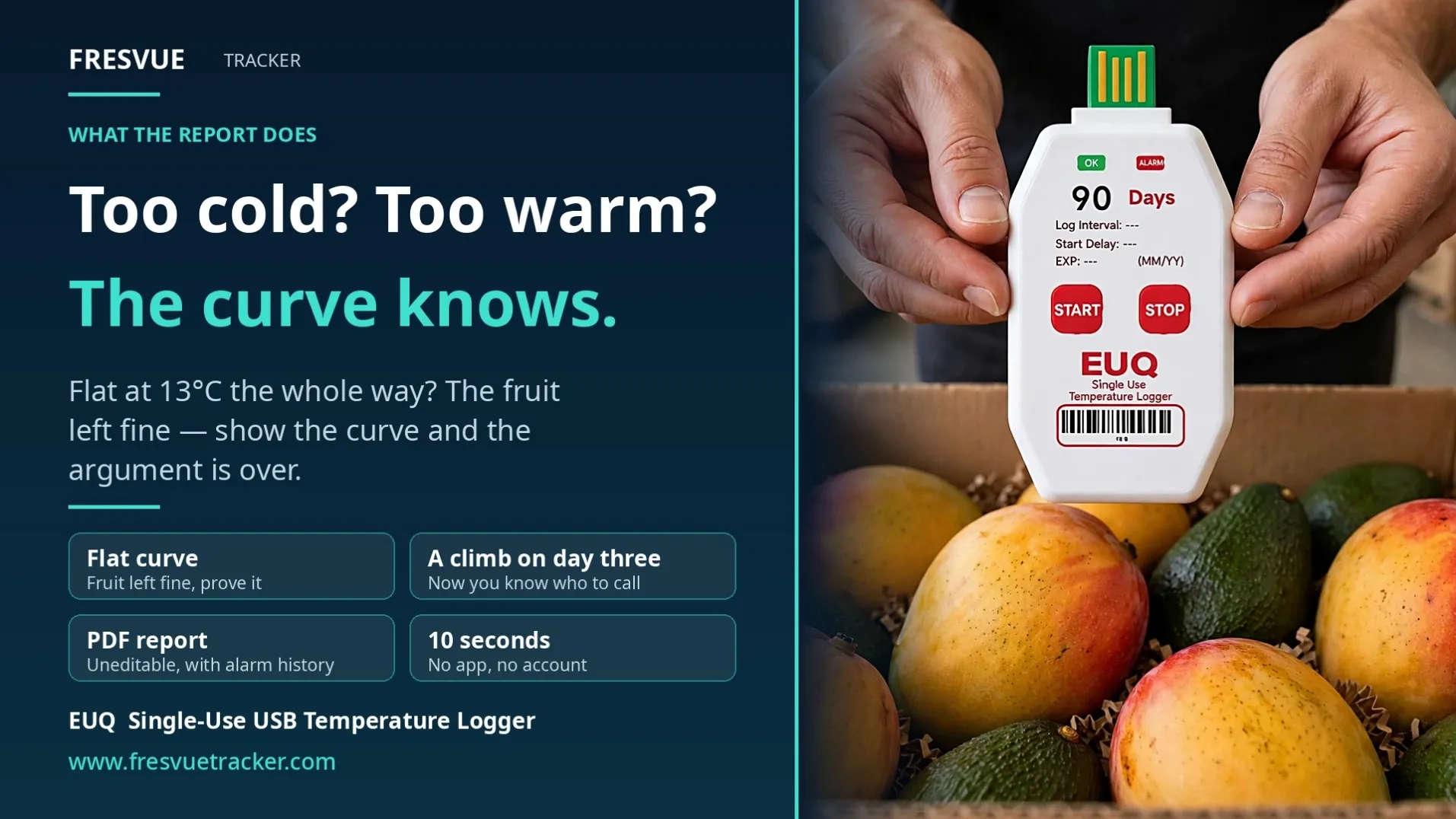
So the box arrives. The buyer plugs the logger in and looks at the curve. Flat at 13°C all the way? Then the fruit left your packhouse in good shape, and the curve says so — no argument needed. A dip to 8°C on day two, while the container sat waiting at the port? Then you know the exact hour the skin started to go black. Not a guess. A timestamp.
That one degree is the whole story with tropical fruit. Everything else — the ripening room, the shelf life, the price you get — hangs off it. So the question isn't whether to watch the temperature. It's whether you can prove it when it matters.
A case of loggers costs less than a single rejected container. That's the whole calculation.
Related reading: Fruit Arrived Spoiled. Who Pays? · Single-Use vs Reusable Temperature Data Loggers: How to Choose for Your Cold Chain