Oct 13, 2026
GDP-Compliant Temperature Monitoring: What Auditors Actually Check
What GDP compliance really expects from temperature monitoring in pharmaceutical distribution — calibration, complete data and audit-ready reports — and how to deliver them.
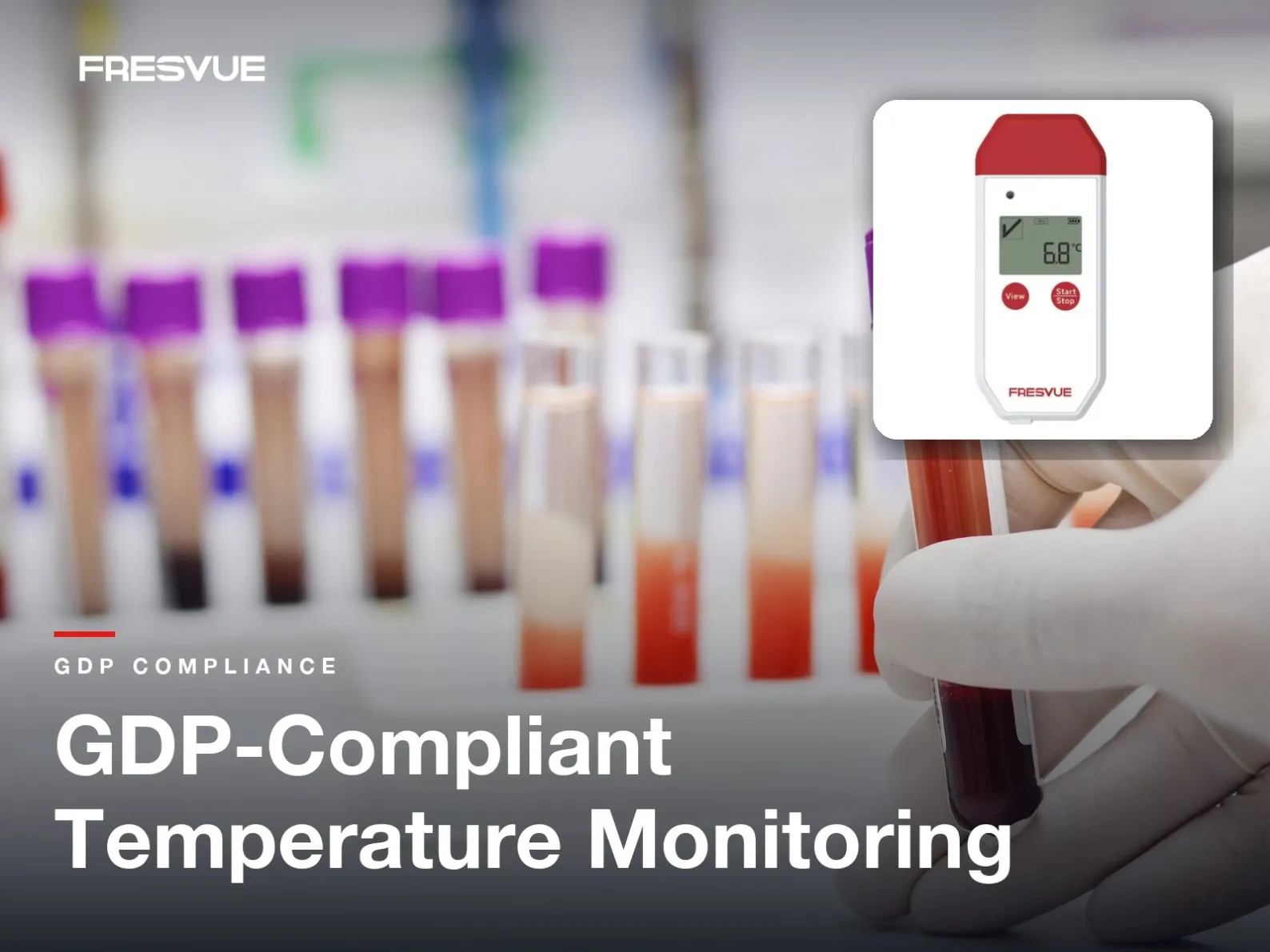
In pharmaceutical distribution, temperature data is not paperwork — it is evidence. When a GDP inspection begins, the question is rarely whether you monitored the shipment. It is whether you can prove it — completely, and on the spot.
EU Good Distribution Practice (GDP) makes that expectation explicit: medicinal products must be stored and transported under controlled conditions, monitoring equipment must be calibrated, and the records must be available to the authorities. For QA and logistics teams, the practical version of the question is simpler — if an auditor asked for your temperature records today, could you produce them in five minutes?
What GDP guidelines expect from temperature monitoring
GDP is a principles-based framework, but its monitoring requirements are concrete. Storage and transport conditions must be defined and maintained throughout the supply chain. Equipment used for monitoring must be suitable for the task and calibrated at defined intervals. The temperature history of every shipment must be documented — and any deviation must be identified, investigated and documented as well.
Nothing in the guideline names a specific device. It demands something harder: a monitoring routine whose evidence stands on its own, even months later, even under scrutiny.
The five questions auditors actually ask
① Is the equipment accurate and calibrated? An auditor will look for the accuracy specification and its traceability — for example, a NIST-traceable sensor with ±0.3°C accuracy. A calibration certificate, not a marketing claim, is what counts.
② Is the data complete? Gaps in a temperature record are red flags. The device must record continuously for the full journey, from dispatch to receipt, with no unexplained interruptions.
③ Can the report be trusted? Raw data should be exportable in a fixed, timestamped format. Automatic PDF/CSV reports generated by the device or its software are far easier to defend than spreadsheets compiled by hand.
④ Were alarms handled? If a deviation occurred, was it detected and acted on? Programmable alarm limits and marked events give an investigation the timeline it needs.
⑤ Can you show all of this for every shipment? One perfect record proves nothing. Auditors sample across shipments, so the routine must be repeatable.
Where basic USB loggers fall short
Basic data loggers record temperature, but many were designed for general food logistics rather than GDP evidence. The usual gaps: accuracy tolerances too wide to assess a tight 2–8°C product range, no way to mark interventions, disposable housings that are awkward to archive, and reports that have to be manually exported or reformatted. In an audit, each of those gaps becomes a question you have to answer.
How the ZLOGPRO-30XT was built for GDP programs
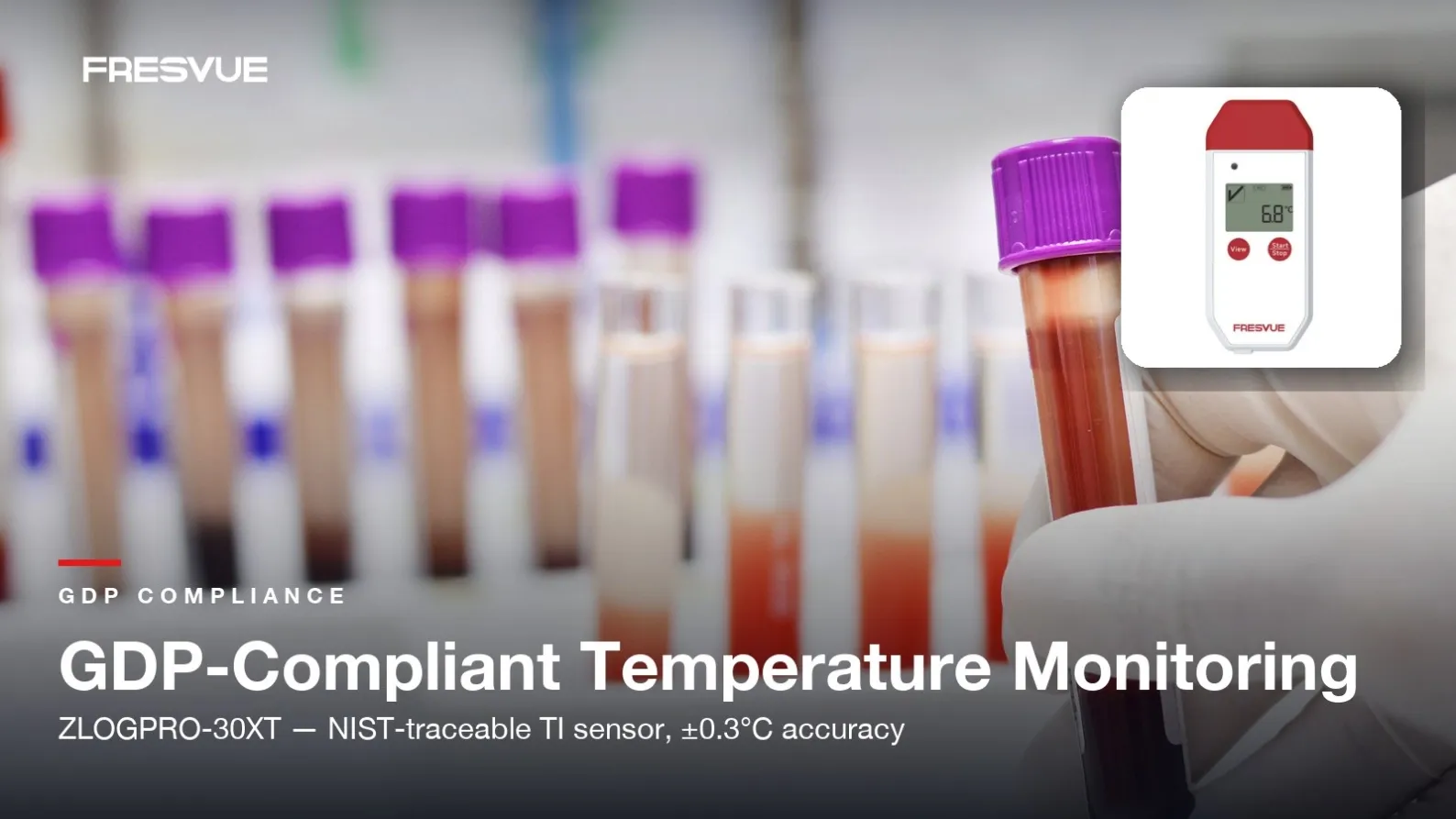
FRESVUE’s ZLOGPRO-30XT is a reusable high-accuracy USB temperature logger designed around the evidence chain. Its NIST-traceable TI sensor delivers ±0.3°C accuracy across -30°C to 70°C — enough precision to assess tight 2–8°C shipments with confidence. With up to 33,000 data points and logging intervals from 1 minute to 24 hours, it covers everything from short urban transfers to long international lanes without gaps.
For audit work it adds the practical tools: up to six programmable alarm limits, mark events to document handovers and interventions, and automatic PDF/CSV reports via USB. The Manager desktop view compares trips side by side, and a built-in data backup and verification report helps preserve the record trail. Certified to CE, RoHS and EN12830:2018 with an IP65 housing, it is designed to be deployed, redeployed — and defended.
Building a defensible monitoring routine
The device is half the story; the routine is the other half. Define acceptable conditions for each product type, set alarm limits that match them, calibrate on schedule, archive reports together with the shipment documentation, and investigate every alarm — including the ones that resolve themselves. Do that consistently, and GDP compliance stops being an inspection event. It becomes what it should be: a by-product of good operations.
Planning an upgrade for regulated lanes, or replacing single-use loggers in your GDP program? Contact FRESVUE — we supply temperature monitoring equipment and configuration support to pharmaceutical distributors in 60+ countries.