Oct 13, 2026
Why Real-Time Temperature Monitoring Is Indispensable in Fruit, Seafood and Vaccine Transport
In cold chain logistics, losses are decided by when you notice a problem — not by temperature alone. How 4G real-time temperature monitoring protects fruit, seafood and vaccine shipments in transit.
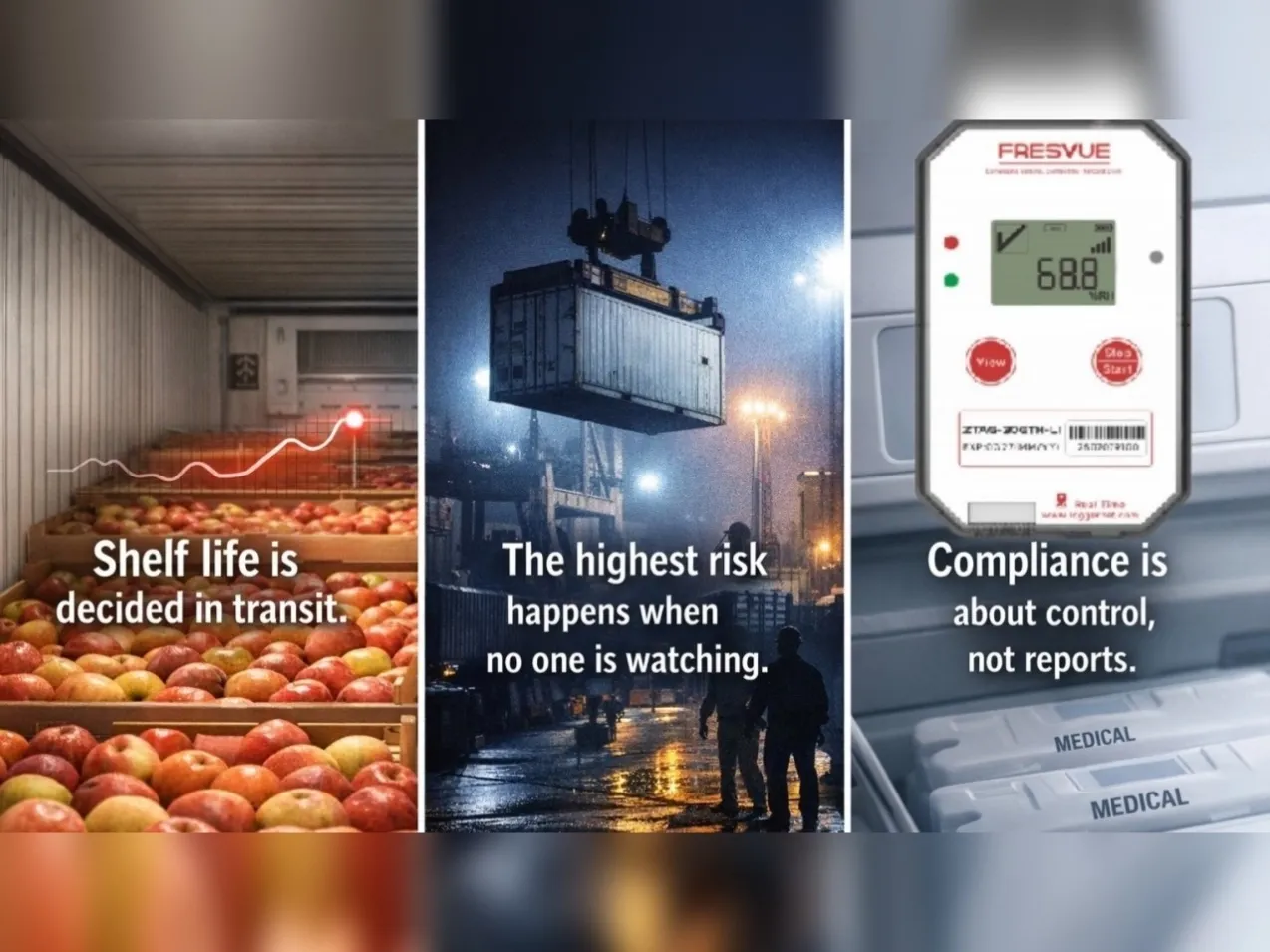
In cold chain logistics, the scale of losses is often decided not by temperature itself, but by when you find out that something went wrong. If an anomaly happens mid-transit and only surfaces on arrival, the window for action has already closed.
That is why a growing share of high-value shipments now travels with 4G real-time temperature data loggers. It is not about being “more advanced” — it is about intervening earlier, while the cargo is still moving.
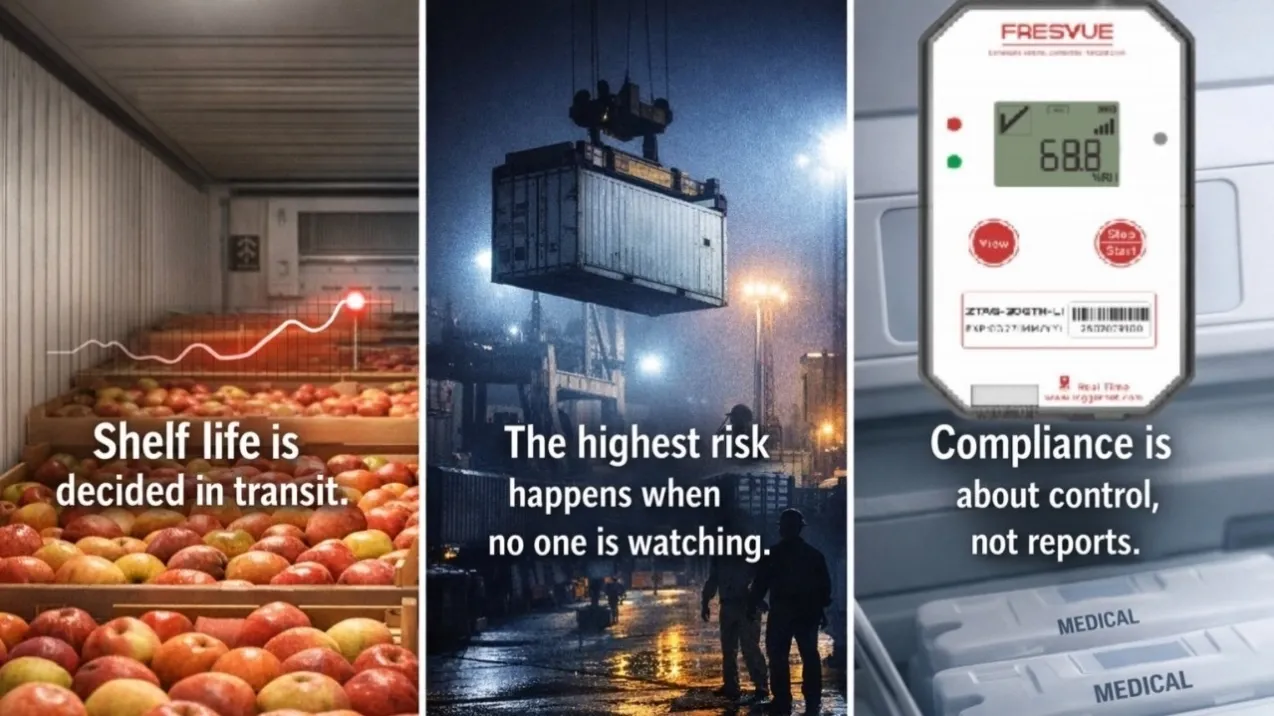
Fruit transport: when shelf life depends on reaction speed
For high-value fruits, even a brief but sustained temperature fluctuation can directly affect ripening and final quality. During 20–30 day international shipments, operations commonly run into short refrigeration failures, nighttime temperature swings, and temperature rises caused by port delays.
If these excursions are only discovered on arrival, managers are left with post-mortem analysis. Real-time monitoring changes the equation: anomalies are detected as they happen, while the shipment is still in transit — which is the only moment when intervention is still possible.
For high-value fruit, the value of real-time data is not that it records the problem. It is that it buys time.
Seafood transport: risks that happen in “invisible” segments
Seafood cold chains are long, complex and variable. Handling, transshipment, waiting periods and night operations — these are the moments when temperature is most likely to drift, and the hardest to monitor.
4G real-time monitoring makes these blind spots visible: the exact time of an anomaly, traceable location data, and clear identification of the highest-risk segments. The goal is not post-event accountability — it is to reduce the risks that cannot be corrected after arrival. In high-risk seafood shipments, real-time data works as a risk visualisation tool.
Vaccine transport: “full control” is a prerequisite, not an outcome
For vaccines, temperature compliance is not just an outcome — it is a process requirement. Many vaccines are highly sensitive: 2–8°C in storage, no freezing, and no tolerance for sustained or repeated fluctuation.
That is why the industry looks beyond whether the final data meets the requirements, and asks whether the shipment stayed fully monitorable and intervenable the whole way. Real-time monitoring delivers instant alerts when an anomaly occurs, an immediate record of the risk, and continuous visibility of transport status — a higher level of certainty for both compliance and quality decisions.
What to look for in a real-time temperature logger
If you are evaluating real-time monitoring for perishable or regulated cargo, the essentials are: continuous 4G connectivity with offline backup storage, temperature and humidity sensing, live location tracking, configurable alarm limits, and encrypted PDF/CSV reports your auditors will accept. Choose single-use or reusable loggers to match your lane structure — and keep the device simple enough that receiving teams actually use it.
Real-time data solves the problem of lag, not temperature
4G real-time temperature data loggers cannot eliminate every risk. But they do one crucial thing: they turn losses that have already happened into risks that can still be managed. In the transport of high-value, sensitive goods such as fruits, seafood and vaccines, what you are really fighting is not temperature itself — it is delayed information.
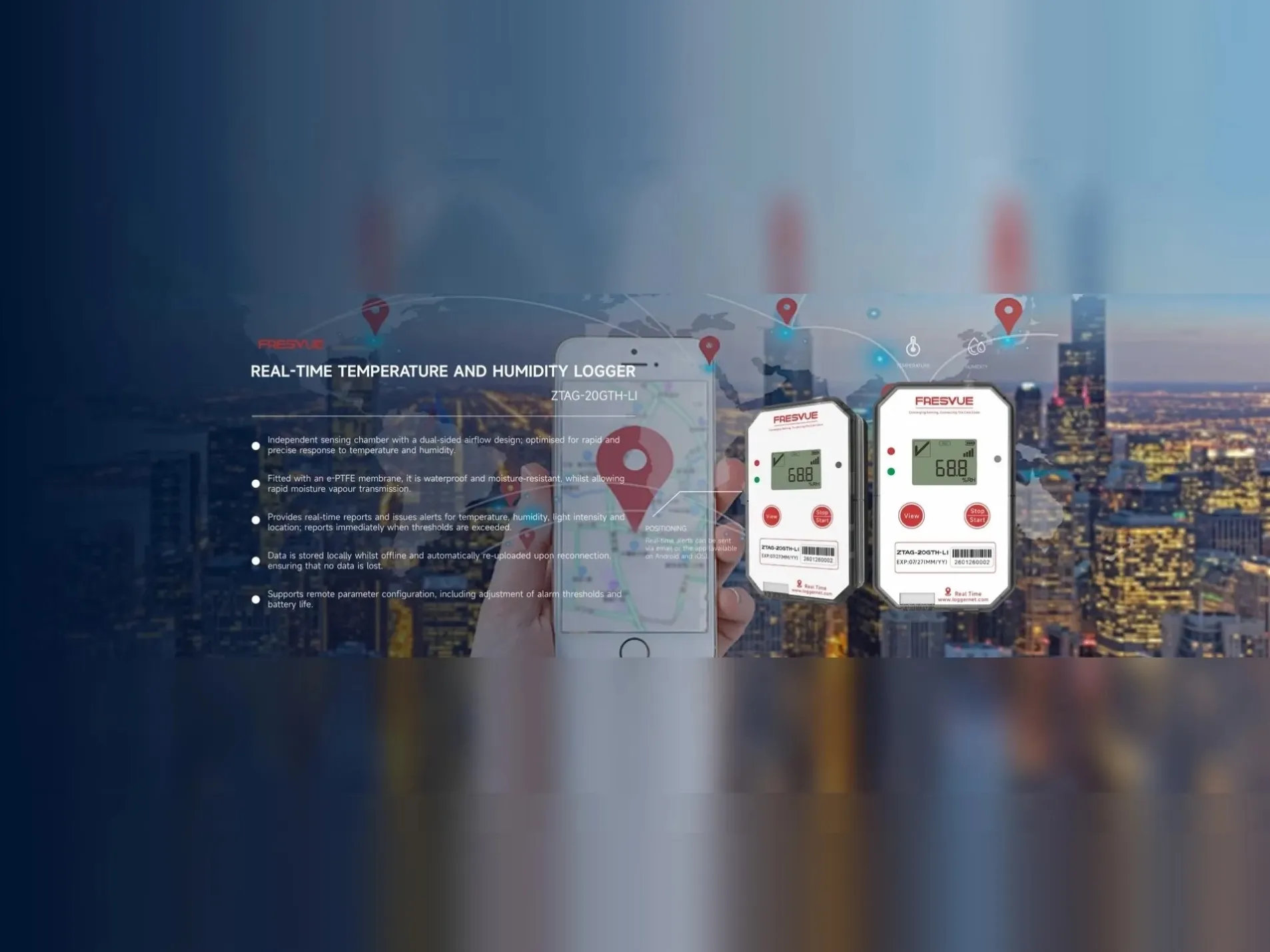
FRESVUE’s ZTAG-20GTH-LI is a single-use 4G real-time temperature and humidity data logger built for exactly these shipments — live temperature, live location and instant alerts from dock to destination. Contact FRESVUE to build real-time visibility into your lanes; we supply cold chain monitoring solutions to distributors and logistics teams in 60+ countries.