Single-Use vs Reusable Temperature Data Loggers: How to Choose for Your Cold Chain
Single-use or reusable? Compare cost per trip, data access, battery life and GDP use cases — and which FRESVUE logger fits each shipment.
If you ship temperature-sensitive goods, you have probably asked this question: should the logger come back, or is it a one-way trip? Single-use and reusable temperature data loggers both do the same core job — they record temperature (and usually humidity) through a shipment and produce a report you can show a customer, a QA team or an auditor. The difference is what happens after arrival, and that changes the cost per trip, the workflow and the evidence you end up with.
Here is how to choose, with real examples from the shipments we see every day.
What a single-use logger is
A single-use logger is started once, rides with one shipment, and is not used again. When the goods arrive, someone stops it (or it stops itself) and downloads the report — usually a PDF, often with a CSV of the raw readings attached.
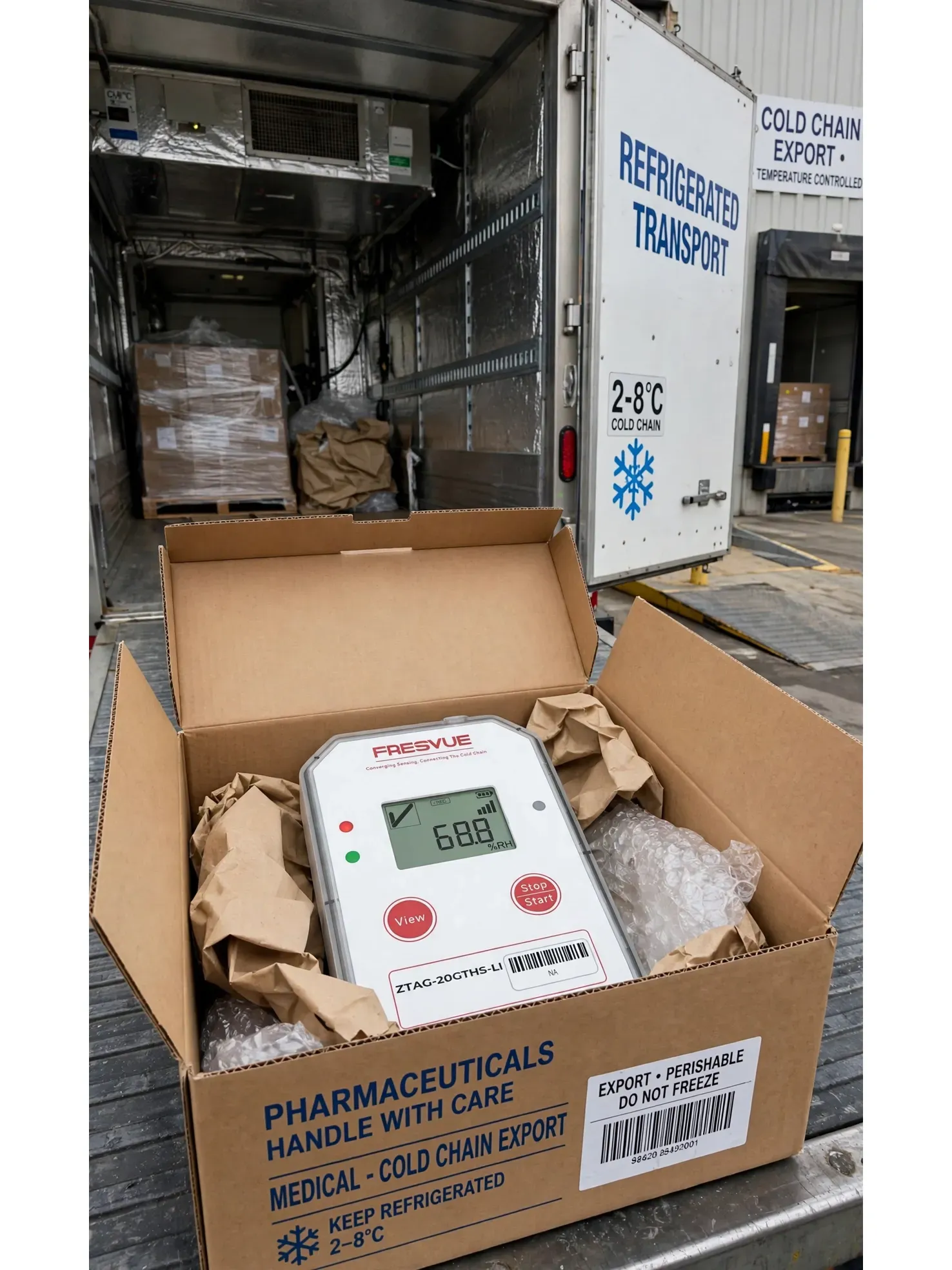
Single-use loggers make sense when the logger will not come back. That covers most export shipments: a container of frozen fish to another continent, a pallet of vaccines on a one-way lane, a box of biologics on dry ice. The receiver keeps the logger and the report, and the cost of the logger is simply part of that shipment's cost.
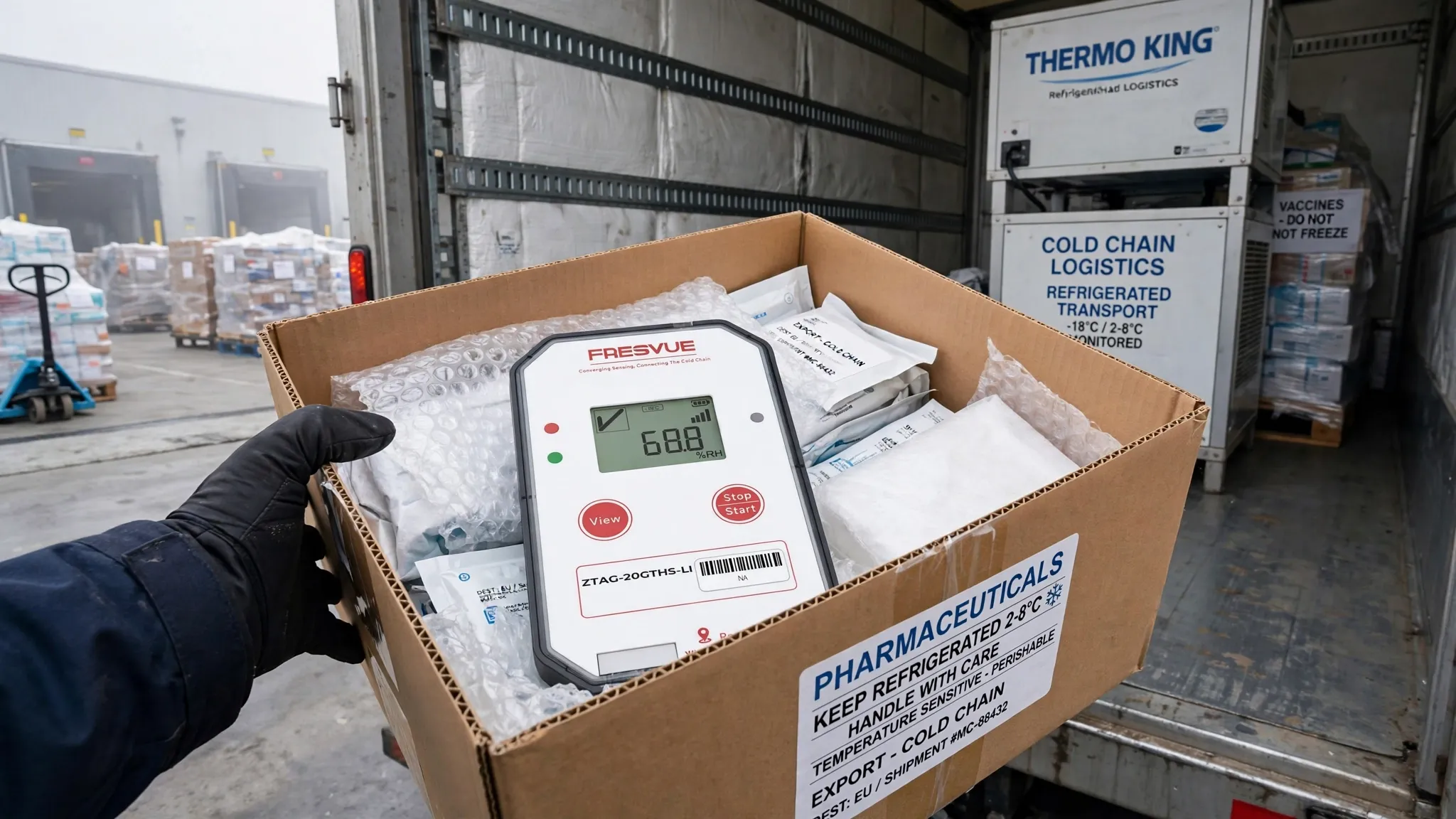
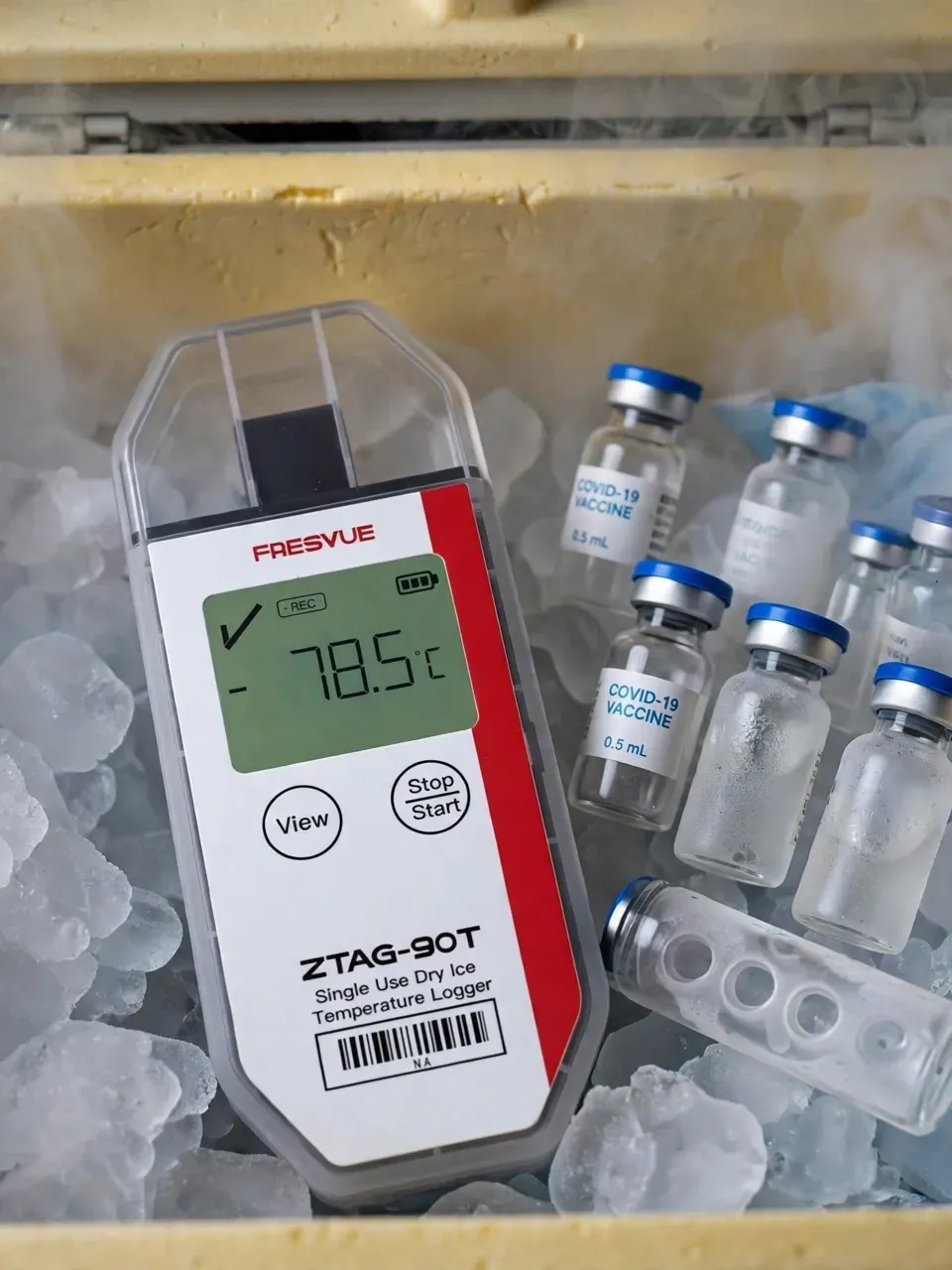
FRESVUE's single-use range covers two very different jobs. The ZTAG-20GTHS-LI is a single-use real-time logger: it streams temperature, humidity and location over 4G while the shipment moves, sends email and app alerts when a threshold is breached, and produces a cloud PDF report — range -20 °C to 70 °C, 0–100 %RH. The ZTAG-90T is a single-use ultra-low logger for dry ice shipping down to -90 °C, built for vaccines, biologics and frozen seafood, with one-click start, an auto-encrypted PDF report, IP65 housing and air-transport compliance (RTCA/DO-160G).
What a reusable logger is
A reusable logger is collected at arrival, its data is downloaded, and it goes out again on the next shipment. It is the same device, doing the same job, many times over.
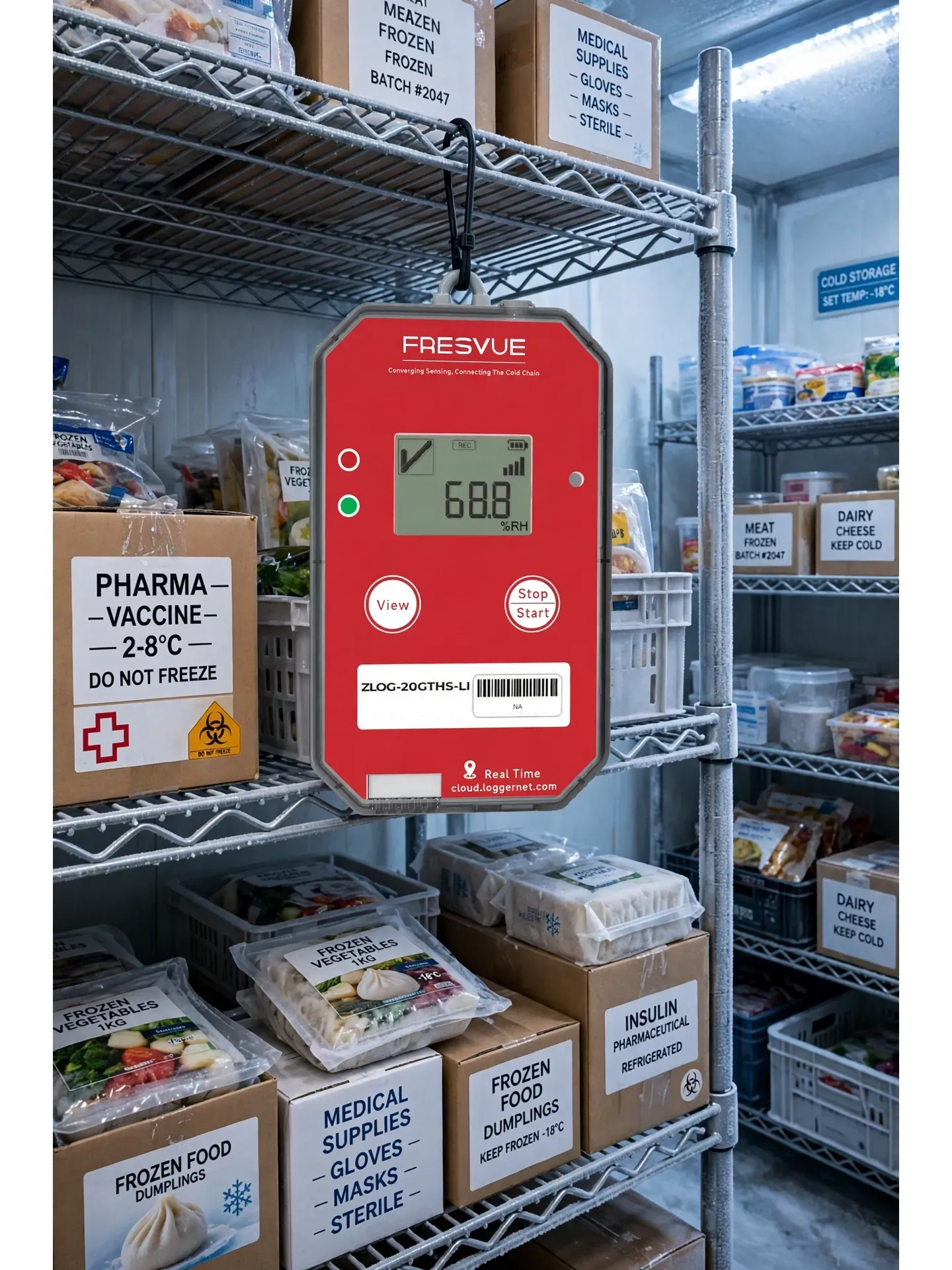
Reusable loggers fit closed loops: goods moving between your own sites, returnable packaging, warehouses and cold rooms — anywhere the device can come back to you.
The ZLOG-20GTHS-LI is FRESVUE's reusable real-time logger: 4G streaming of temperature, humidity and location, with a rechargeable battery, Type-C charging and a two-year service life. It runs 10–120 days per charge, depending on the reporting interval, and covers the same -20 °C to 70 °C, 0–100 %RH range as the single-use model.
Side-by-side comparison
| Single-use | Reusable | |
|---|---|---|
| Up-front cost | Low per unit | Higher per unit |
| Cost per trip | Fixed — one logger per shipment | Falls with every reuse |
| Best for | Export, one-way lanes, pharma, dry ice | Closed loops, warehouses, returnable packaging, mapping |
| Return logistics | None — receiver keeps it | Receiver must return it, or it is lost |
| Data access | PDF/CSV on arrival; real-time models stream over 4G | Same, plus repeated use builds a history per lane |
| Battery | Sized for one trip | Sized for many trips (ZLOG-20GTHS-LI: two-year service life) |
| Evidence for claims | Independent record per shipment | Same, with a device history behind it |
| Risk | None if the lane is one-way | Loss, damage or late returns eat the savings |
How to decide: three questions
- Does the logger come back? If the answer is no — export, a new customer, a one-off lane — single-use is the honest choice. If the answer is yes — your own sites, a regular customer who returns packaging, a warehouse — reusable wins on cost per trip within a few cycles.
- Do you need to know while it is moving, or is arrival enough? A USB logger answers the question at arrival: what happened, and when. A real-time 4G logger answers it while the shipment is still moving, so you can act — reroute, warn the receiver, start a claim — before the goods arrive. That matters most for high-value pharma and long sea voyages, where finding out at unloading is too late. Both single-use (ZTAG-20GTHS-LI) and reusable (ZLOG-20GTHS-LI) real-time models exist, so this choice is independent of the single-use question.
- How cold is it? Standard cold chain (2–8 °C, frozen food, chilled) is covered by the -20 °C to 70 °C range. Dry ice and ultra-low pharma need a different instrument: the ZTAG-90T goes down to -90 °C and is the single-use answer there.
A practical way to start
Many teams run both. A common pattern: single-use real-time loggers (ZTAG-20GTHS-LI) on export and pharma shipments, where the logger never returns and the evidence must travel with the goods; reusable real-time loggers (ZLOG-20GTHS-LI) on domestic and returnable lanes; reusable USB loggers in the warehouse and cold rooms. That keeps the per-trip cost low where it can be low, and the evidence complete where it has to be complete.
Frequently asked questions
Can a single-use logger be used twice? No. It is built and calibrated for one trip, and reusing it would put the record — and any claim based on it — in doubt.
Do reusable loggers need charging? Yes — the ZLOG-20GTHS-LI charges over Type-C; one charge runs 10–120 days depending on the report interval, and the device's service life is two years.
Which type is better for GDP compliance? Both can support GDP work. What matters is the record: continuous temperature data, an alarm history, and a report you can file. Real-time models add live alerts and location, which auditors and QA teams value on pharma lanes.
What about dry ice? Use a logger rated for it. The ZTAG-90T is rated to -90 °C; a standard -20 °C logger will stop recording accurately long before the shipment gets that cold.
The bottom line
Choose single-use when the logger will not come back, reusable when it will. Choose real-time 4G when you need to act while the shipment is moving, USB when the answer at arrival is enough. And match the temperature range to the cargo — especially on dry ice.
If you tell us the lane — product, route, temperature range and whether the logger returns — we will recommend the right logger and a sample to try. Contact the FRESVUE team at Lunazhao@fresvue.com or +86 18688715683, and we will follow up within one business day.