Buying Guides
Shipping Bananas from South America: Why Real-Time Temperature Monitoring Decides What Arrives
Bananas leave Ecuador green and must arrive green — a 13°C setpoint, a three-week voyage and a one-degree margin. Here is what goes wrong inside banana reefers, why end-of-voyage data arrives too late
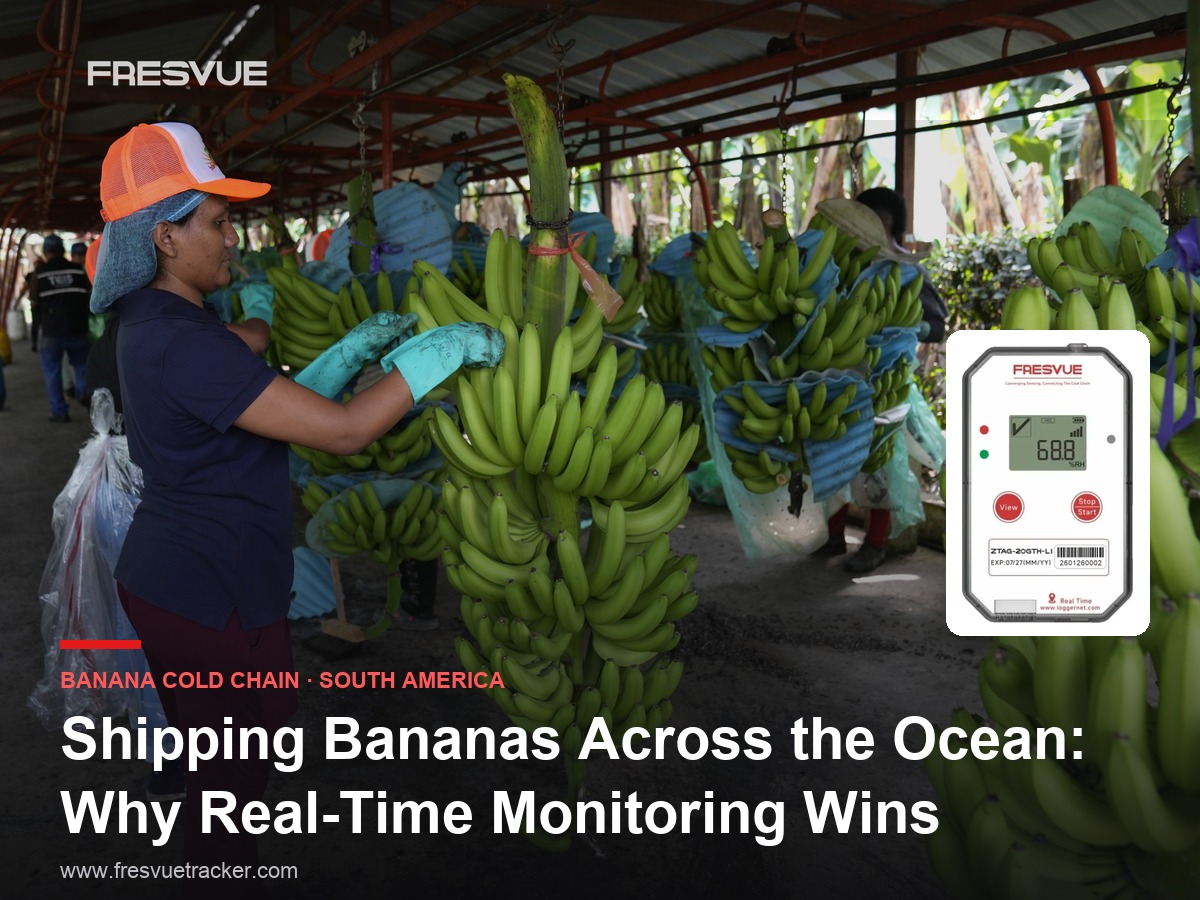
Bananas are the most traded fruit on earth, and most of them start their journey in South America — Ecuador, Colombia, Peru and Central America ship millions of tonnes a year to Europe, North America, the Mediterranean and Asia. Each container spends two to four weeks at sea, and the entire shipment hinges on a single rule: bananas leave green and must arrive green. No other produce category runs a longer voyage on a narrower temperature window.
Why Bananas Are the Most Unforgiving Cargo at Sea
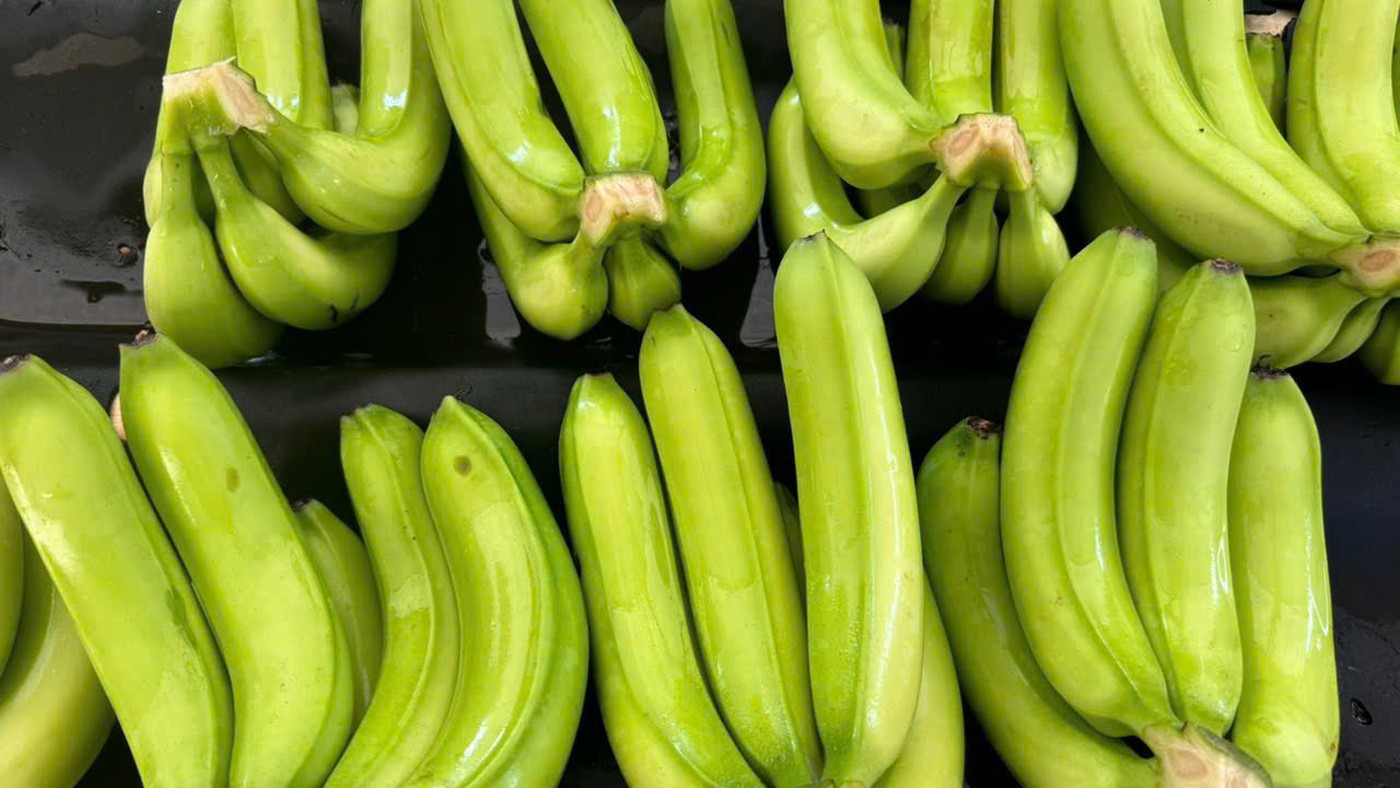
Bananas are harvested green and held in a kind of suspended animation by cold. The standard reefer setpoint sits around 13–14°C. Drift below roughly 12°C and the fruit suffers chilling injury — dull, greyish skin that never ripens properly. Drift above roughly 15°C and ripening starts inside the container: the fruit releases ethylene, which triggers more ripening, and a self-accelerating cascade turns an entire box of green bananas yellow and soft before it reaches the port of discharge. Add a humidity target of 85–95% to keep the peel from drying, and you have a cargo that tolerates about one degree of error for three weeks straight.
Where Banana Containers Actually Go Wrong
Very few banana losses come from a reefer that simply breaks down. They come from the quiet handover points: a setpoint entered incorrectly at stuffing; pre-cooling cut short so the pulp temperature is still high when the doors close; a container left on a tropical dock for hours waiting for a slot; a genset that fails during a transshipment; fresh-air exchange or controlled-atmosphere settings that do not match the fruit's stage; doors opened for inspection and not resealed properly. Each one is small. Each one is silent — green bananas look exactly the same until the ripening cascade has already begun.
The Problem with Finding Out at the Port of Discharge
With a traditional USB logger, the data is read when the container opens — which means a temperature excursion on day nine is discovered on day twenty-two, when the fruit is already in the wrong condition and the only remaining conversation is about blame. Exporter, shipping line and importer each have reasons to believe the problem happened on someone else's watch, and a single logger inside a closed container cannot say where the vessel was when the excursion occurred.
Real-time monitoring inverts that timeline. The excursion on day nine is known on day nine: the exporter can contact the line while the container is still at sea, the reefer setpoint can be checked and corrected, the importer can prepare to receive fruit that needs faster distribution, and every reading is tied to a time and a location. The loss, if any, is bounded — and the responsibility is documented rather than argued.
What Real-Time Monitoring Looks Like Inside a Banana Reefer
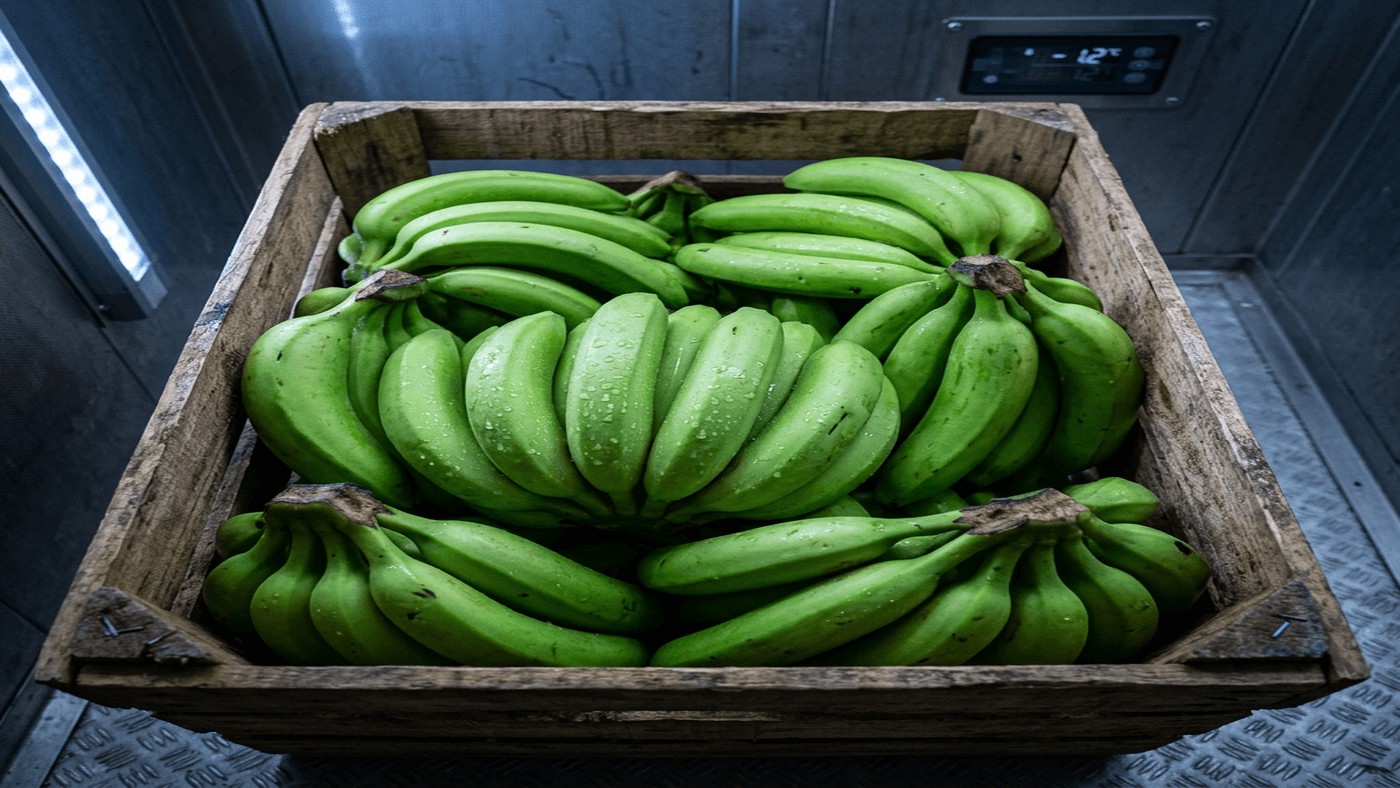
The logger goes inside the cargo — at pallet level in the middle of the load, away from the door and the evaporator outlet, so it reads what the fruit experiences rather than the air stream. It measures temperature and humidity together and transmits over 4G whenever a network is reachable: at the loading port, along coastlines, at transshipment hubs and at the destination. During open-ocean stretches with no signal, readings are stored locally and uploaded automatically once the container is back in range, so the record has no gaps. Alerts go to email and app the moment a reading leaves the band you set, and location tracking shows where the container was at each reading.
The ZTAG-20GTH-LI single-use real-time temperature & humidity logger was built for exactly this lane. Its independent dual-sided airflow sensing chamber responds quickly inside dense pallet stacks, the e-PTFE membrane resists the humid tropical conditions of a banana reefer, alarm thresholds can be reconfigured remotely mid-voyage, and because it is single-use there is no return logistics from Europe — place it at stuffing and let it travel. Exporters running the same lane every week with a dedicated container pool may prefer the reusable ZLOG-20GTH-LI, which offers the same real-time capabilities with a two-year service life.
A Practical Setup for Banana Exporters
Verify pulp temperature before stuffing — a logger cannot fix fruit that was never properly pre-cooled; aim for the setpoint at the pulp, not just the air.
Place one logger per container at mid-load pallet level; for high-value or long-haul 40-foot shipments, a second unit near the door end catches handling exposure.
Set the alert band at roughly 12.5–14.5°C and 80–95% RH so the alarm fires before the fruit is actually damaged, giving time to intervene.
Share dashboard access with your importer. Transparency during the voyage removes most of the arguments after it.
Attach the PDF report to every shipment file — it becomes the reference the moment a claim appears.
Data Settles Claims — and Builds Repeat Business
When a banana container arrives in poor condition, a timestamped, geolocated temperature record shows whether the problem happened at the loading port, during transshipment, on the vessel or in the final truck leg. Responsibility becomes a matter of record, settlements become fair, and importers return to the exporters who can prove what they shipped. Our guide to real-time monitoring for fruit, seafood and vaccine transport and the fresh produce cold chain overview cover the surrounding workflow, and more field results are collected in our case studies.
Ship Bananas with Proof, Not Hope
A three-week voyage on a one-degree margin is not a place to rely on luck. Real-time monitoring turns the banana cold chain from a sealed box you open and inspect at the end into a journey you can see, correct and prove all the way across the ocean. Contact FRESVUE for the full catalog and a one-on-one consultation on your banana lanes.