Buying Guides
Pharmaceutical Storage Guide: Temperature Ranges and Monitoring for Every Drug Class
Prescription drugs live or die by storage temperature. A practical guide to the four pharmaceutical storage ranges — ultra-low (-90 to -70°C), refrigerated (2-8°C), cool (≤20°C) and insulated transpor
A pallet of mRNA vaccines that warmed during a tarmac delay. Insulin that spent four hours on a delivery van in July. Eye drops frozen solid by a faulty warehouse unit. In pharmaceutical storage, temperature is not a detail — temperature is the product. This guide covers the four storage ranges used across the pharmaceutical supply chain, what actually goes wrong in each one, and how to monitor them so the data trail holds up to any audit.
Ultra-Low Temperature Storage: -90°C to -70°C
Ultra-low ranges serve the most temperature-sensitive biological products: mRNA vaccines, oncolytic virus therapies, cell and gene therapy intermediates and certain plasma derivatives. These products are extremely sensitive to temperature fluctuation — thawing must never be followed by refreezing, because a single warming event can permanently destroy biological activity. Unlike an excursion you can see, that damage is usually invisible until potency testing.
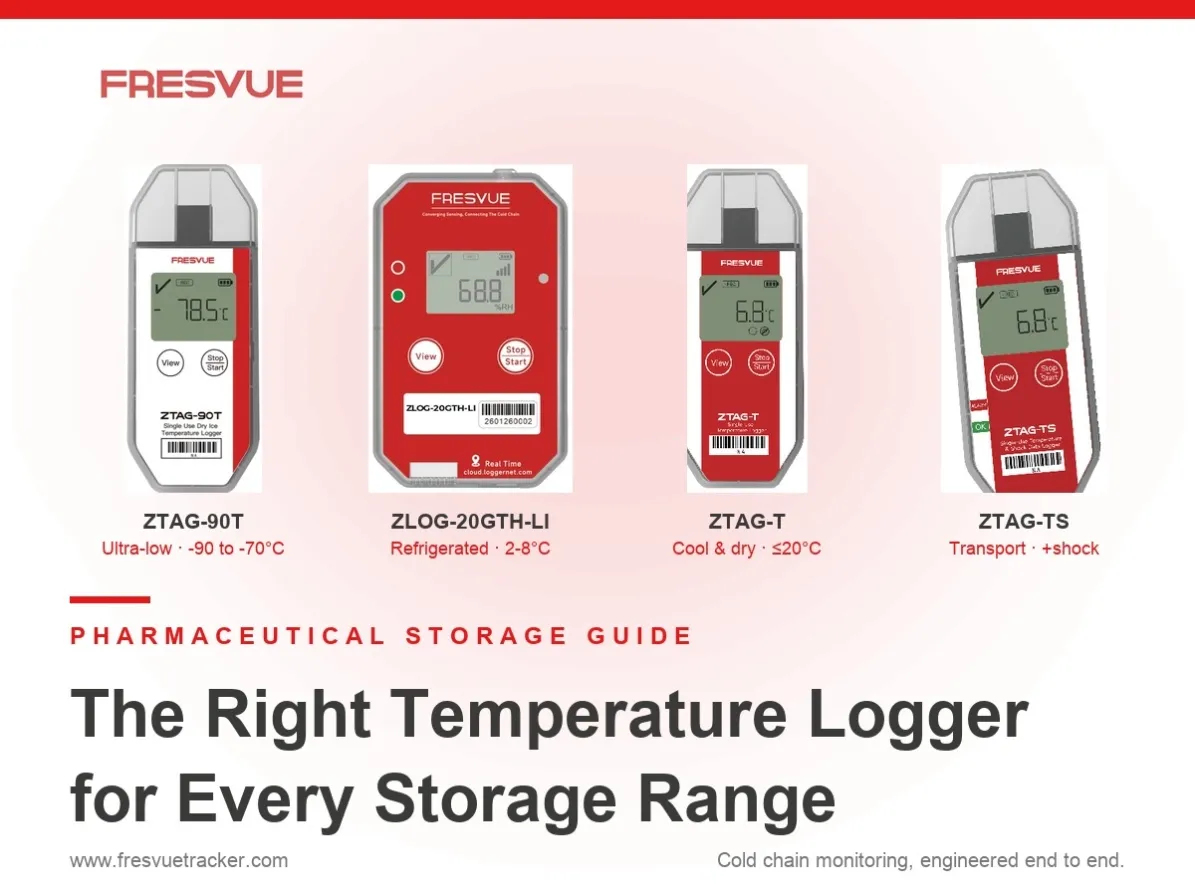
Monitoring this range means dry ice shipments and low-temperature freezers — operating conditions far below the limits of ordinary data loggers. The ZTAG-90T single-use dry ice temperature logger records down to -90°C and generates a tamper-proof PDF report on arrival. For the full picture on shipping at this temperature, read our dry ice shipping guide.
Refrigerated Storage: 2°C to 8°C, Do Not Freeze
The 2-8°C range is the backbone of biological storage: protein injections, insulin, eye drops, most vaccines and the majority of biotech products. It is also the range where small mistakes accumulate quietly. Prolonged over-temperature accelerates drug degradation, while freezing damages the structure of protein-based drugs — a frozen vial of insulin is a discarded vial of insulin, even after it returns to range.
Unlike ultra-low shipments, refrigerated storage is continuous: pharmacies, hospital warehouses and distribution centers hold these products for weeks or months. That calls for monitoring that never blinks — continuous recording rather than spot checks, and real-time visibility so an excursion is caught while it happens instead of discovered at the end. The ZLOG-20GTH-LI multi-use real-time temperature & humidity logger is cloud-connected, reusable and tracks both temperature and humidity for storage rooms as well as transport. If you are building out a pharma monitoring setup, our pharmaceutical cold chain overview walks through the full workflow from receipt to dispatch.
Cool Storage: ≤20°C — Watch Humidity and Light
Oral tablets, capsules and topical ointments tolerate modest temperature swings — which is exactly why they are the most neglected products in the warehouse. At this range, temperature is rarely what ruins stock. High humidity and heat cause moisture uptake, oxidation and mildew, and light exposure degrades light-sensitive formulations. The threats are slow, cumulative, and often become visible only after packaging integrity has already failed.
The ZTAG-T single-use temperature & humidity logger records both variables across the storage period and produces a complete report at the end of it — a simple way to prove that ambient storage stayed within its designated envelope.
Insulated Coolers & Cold-Chain Transportation: Add Shock to the Equation
Lyophilized products, injectable medicines and virtually every temperature-controlled shipment rely on insulated coolers and phase-change materials. Temperature monitoring is standard practice here — but it misses half the risk. Shock risks peak during handling: drops and rough handling crack vials and damage cooler insulation, yet the temperature trace can look flawless while the cargo inside is broken.
The ZTAG-TS single-use temperature & shock data logger closes that blind spot. It records temperature and impact on the same timeline, so a shipment can be traced back to a specific drop — how hard and when. Records enable traceability, and traceability protects both the product and the team that handled it.
Matching the Logger to the Storage Range
Ultra-low (-90°C to -70°C) — ZTAG-90T, single-use dry ice and ultra-low temperature logging.
Refrigerated (2-8°C) — ZLOG-20GTH-LI, reusable real-time temperature and humidity monitoring.
Cool storage (≤20°C) — ZTAG-T, single-use temperature and humidity logging.
Insulated transport — ZTAG-TS, single-use temperature and shock recording.
Whichever range you operate in, regulators and auditors look for the same three things: continuous records instead of spot checks, a complete data trail without gaps, and reports that can be exported and attached to a batch file the moment they are requested. Our GDP compliance guide breaks down what auditors actually check.
Get the Storage Temperature Logic Right
Choosing a storage range — and the logger that monitors it — is a product decision as much as a regulatory one. Get it wrong and the cost shows up as rejected shipments, repeat testing and audit findings. Get it right and the monitoring pays for itself the first time a batch is questioned. Not sure which logger fits your products? Send FRESVUE your storage ranges and shipment profile — we will recommend the right configuration and share the full catalog.